
Most people hear a quote about wealth and think it’s only about money. That’s where the meaning gets flattened fast.
Democritus said some version of wealth is not in having many possessions, but in having few wants. If you ignore that idea, you can end up chasing money forever and still feel behind. I’ve seen that happen in small ways and big ones, and it usually leaves people tired, not satisfied.
The good news is that this quote is simple once you slow it down. It’s about freedom, self-control, and the kind of life that feels enough. And that’s what I want to unpack here, along with how it connects to other famous sayings about work, effort, and meaning.

What Democritus Was Really Getting At
Democritus was an ancient Greek philosopher, but you don’t need a philosophy degree to understand the heart of this quote.
He was saying that wealth is partly a matter of desire. If your wants keep growing, your sense of being “rich” keeps slipping away. If your needs stay reasonable, you can feel wealthy with much less.
That’s a very different idea from modern money talk. Most of us are trained to think wealth means accumulation. More income, more stuff, more upgrades, more proof that life is going well.
But Democritus flips that around. He suggests that a person can be materially modest and still live with real abundance if their mind isn’t always demanding more.
That’s the part people miss at first. It’s not anti-money. It’s anti-restless hunger.
The Quote in Plain English
Here’s the simplest version:
- If you want less, you already have more
- If you need less, money goes farther
- If your contentment depends on fewer things, wealth grows quietly
That sounds almost too easy, but it holds up in real life.
A person who always wants the next purchase never gets to enjoy what they have. A person who can settle into what’s enough usually has more calm, and calm is worth something.
This is why the quote still hits. It reminds you that wealth isn’t only in your wallet. It’s also in your expectations.

Why This Quote Still Matters Now
We live in a time that constantly pushes comparison. Social media shows other people’s homes, cars, trips, closets, and routines, all polished up and ready to make you feel behind.
That’s why Democritus sounds more modern than ancient. His point lands right in the middle of consumer culture.
If you spend every day measuring your life against someone else’s, you’ll usually feel poor even when you’re doing okay. Not because you are, but because the target keeps moving.
The quote is a warning against letting desire run the show.
And that matters for practical reasons too. People often overspend not because they love luxury, but because they feel they should want more. That’s a rough way to live.
A Closer Look at “Wealth” in the Quote
The word wealth here doesn’t have to mean a giant bank account.
It can mean:
- enough food without stress
- a home that feels safe
- time that isn’t fully owned by work
- health that lets you enjoy your day
- peace of mind around money
That last one gets overlooked a lot. But honestly, peace of mind is one of the first things people notice when their finances feel stable enough.
The tricky part is that the quote doesn’t promise comfort will come from outside you. It suggests that some of it starts with a reset in how you think.
I’ve noticed that people often fight this idea at first. They hear “want less” and assume it means settling for a bad life. It doesn’t. It means knowing the difference between enough and endless wanting.
The Difference Between Need and Want
This is where the quote becomes useful, not just poetic.
A lot of financial stress comes from mixing up needs and wants. Once those get blurred, every want starts feeling urgent.
Here’s a quick way to separate them:
| Need | Want |
|---|---|
| Keeps life stable | Makes life feel nicer |
| Food, shelter, basic transport | Upgrades, extras, status items |
| Reduces stress | Often adds excitement |
| Usually practical | Often emotional |
That table sounds obvious, but it’s amazing how often people ignore it in daily spending.
One thing I learned the hard way is that a “small” want can become a habit fast. A few repeated extras don’t feel like much at first, then suddenly your budget is doing all the talking.
That’s where Democritus becomes practical. He’s basically asking you to stop giving every want the same weight as a need.
How This Connects to Old and New Advice
Democritus’ thought sits in the same general family as a lot of wisdom about self-reliance and contentment.
A good modern example is the idea behind the meaning behind the “teach a man to fish” quote. That saying focuses on skills over handouts, while Democritus focuses on desires over possessions. Different angle, same lesson: lasting security comes from something deeper than quick gain.
That connection matters because wealth is often treated like a thing you grab. But a lot of real wealth comes from what you know, what you can do, and how much you actually need.
The quote also fits the logic people use when they talk about a meaningful life. You can see a similar emotional thread in the meaning of “You’re Gonna Go Far” by Noah Kahan, where growth and distance are tied to more than just success. There’s a sense that value isn’t only visible on a spreadsheet.
Why People Resist This Idea
To be fair, Democritus’ quote can sound annoying if you’re under financial pressure.
If you’re struggling to pay bills, hearing “want less” can feel like someone is telling you to smile through it. That’s not what this should mean.
The quote isn’t saying money doesn’t matter. It clearly does. It’s saying money alone can’t fix a mind that always feels incomplete.
That’s a big difference.
A person in debt doesn’t need shallow advice. They need practical help, more stability, and often more income. But even then, the quote still has value, because bigger earnings can disappear quickly if every raise turns into a bigger appetite.
More money doesn’t automatically create more wealth. Sometimes it just creates a more expensive version of the same stress.
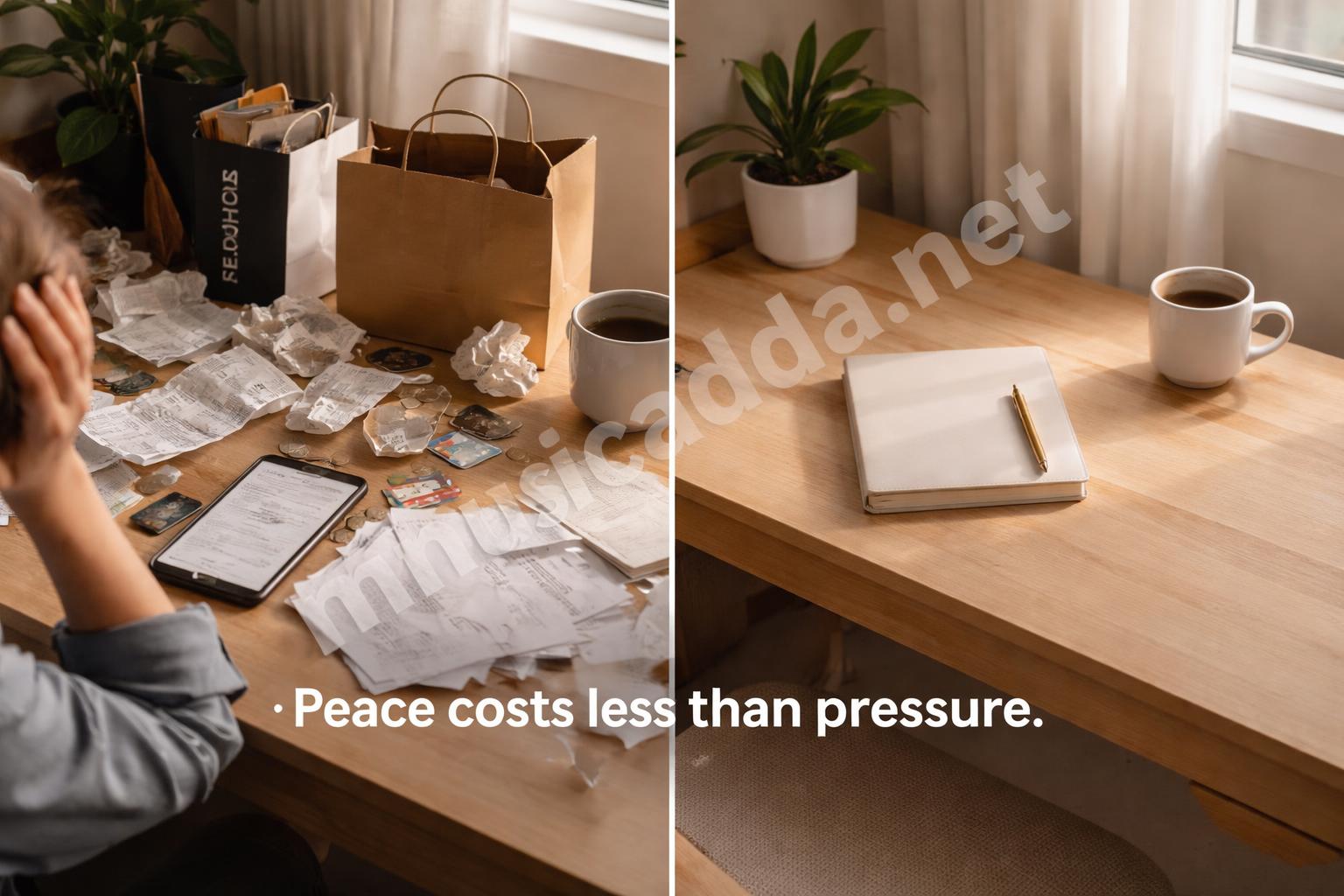
The Dark Side of Wanting Too Much
There’s a reason some people stay anxious even when things are going well. Wanting more can quietly become a habit of mind.
At first it looks harmless. You want a better phone. Then a better car. Then a bigger place. Then more recognition. Then more proof. Then more, more, more.
And if that loop never stops, every milestone becomes temporary.
That’s where Democritus feels almost blunt. He’s not offering a fancy solution. He’s saying the problem may be your appetite itself.
I think that’s a little uncomfortable, which is exactly why it lasts. Quotes that flatter us fade fast. Quotes that challenge us tend to stick.
A Real-Life Way to Read the Quote
If you want to apply the quote without making it too abstract, try reading it like this:
- Name what you actually need
- Separate it from what you only want
- Notice what enough would look like
- Spend with that line in mind
- Check whether your stress is coming from money or from comparison
That simple process can change how you think about wealth pretty quickly.
It won’t make problems vanish. But it does stop you from treating every desire like a crisis.
And that’s useful. Because a lot of the emotional weight around money is really pressure built by unclear boundaries.
A Quick Warning About Misreading the Quote
People sometimes turn this saying into a moral lecture. That’s not helpful.
They say if you’re not content, you’re failing spiritually. Or if you want nicer things, you’re shallow. That’s too neat, and life isn’t that neat.
The quote works best when it stays grounded.
- It’s not shame.
- It’s not guilt.
- It’s not anti-ambition.
- It’s a reminder that contentment is part of wealth.
That’s a more balanced reading, and a more honest one too.
A person can want a better job and still appreciate simple living. A person can earn more and still keep modest habits. Those things don’t cancel each other out.
Why the Quote Feels So Modern
This idea is everywhere now, even when people don’t name it.
Minimalism, budgeting, low-buy challenges, digital detoxes, and “buy less” habits all touch the same nerve. People are realizing that endless consumption doesn’t always produce a better life.
Sometimes it just produces more clutter, more decision fatigue, and more guilt.
That’s why Democritus still gets quoted. He understood something basic: a smaller appetite can make a smaller life feel bigger.
That doesn’t mean everyone should live with almost nothing. It means there’s power in being selective about what you let matter.

What This Quote Does Not Mean
It does not mean you should never improve your situation.
It does not mean ambition is bad.
It does not mean poor people are somehow “better” because they have less.
And it does not mean comfort is a moral weakness.
What it does mean is that more possessions don’t automatically equal more peace. That’s the line worth holding onto.
A lot of people spend years trying to buy relief. The quote suggests a different route: reduce unnecessary wanting, and some of the pressure drops on its own.
That’s not everything, but it’s something.
The Best Way to Use the Quote Today
If you want to make Democritus practical, use it as a filter before spending or comparing.
Ask yourself:
- Do I actually need this?
- Am I trying to solve a real problem?
- Or am I just chasing the feeling of being ahead?
That last question matters more than people think.
Sometimes the thing you want is fine. The problem is the emotional story around it. If you buy to impress, to compete, or to quiet insecurity, the relief usually fades fast.
The quote asks for a slower kind of honesty. That’s hard, but useful.
A Small Lesson That Keeps Coming Back
One thing I’ve noticed is that people rarely regret not owning the most stuff.
They regret the debt, the stress, the clutter, the comparison, and the time spent chasing what never felt quite enough.
That’s why this quote stays relevant. It doesn’t tell you to stop living. It tells you to stop confusing excess with freedom.
And once you see that clearly, a lot of money decisions get simpler.
Final Thought
Democritus’ quote on wealth works because it’s not really about ancient Greece at all. It’s about the pressure of wanting too much, and the relief that comes from knowing when enough is enough.
If you remember only one thing, make it this: wealth isn’t just what you have, it’s how little you need to feel secure.
That idea doesn’t solve everything. But it does make life a little quieter, and sometimes that’s the richest thing of all.

Save This Guide on Pinterest
Save this image to Pinterest so you can easily return to this guide later.