If you’re looking for Jai Ganesh Aarti English lyrics, the biggest problem is usually not devotion, it’s confusion. One version says a line slightly differently, another adds a word, and suddenly the whole flow feels off.
That matters more than people think, because when you can’t follow the words, you stop singing with confidence. In a daily puja or a family gathering, that awkward pause can break the rhythm.
So in this article, I’ll keep things simple. You’ll get the full Jai Ganesh Aarti English lyrics, an easy-to-follow version, a clean word-by-word feel, and a few practical tips that make it easier to sing without losing the meaning.
Why the English version helps so much
I’ve noticed that many people don’t want a translation just to “understand” the aarti. They want a version they can actually sing while the prayer is happening.
That’s where an English rendering helps. It gives you the shape of the prayer first, and the meaning settles in naturally after that.
One thing I learned is that a good English version doesn’t need to be overly poetic. It just needs to be steady, clear, and easy to remember.
For readers who want a broader collection too, this roundup of 51 Jai Ganesh Aarti Lyrics to Bring Blessings, Peace & Prosperity is a helpful place to compare different forms and see how the same devotion is expressed in slightly different ways.
Jai Ganesh Aarti English Lyrics: complete words
Here’s the most commonly used English version in a clear, singable format:
Jai Ganesh, Jai Ganesh, Jai Ganesh Deva
Mata Janki, Pitah Mahadeva
Ek dant dayavant, char bhuja dhari
Mathe sindoor sohe, muse ki savari
Paan chadhe, phul chadhe, aur chadhe meva
Ladduan ka bhog lage, sant kare seva
Andhan ko aankh det, kodhin ko kaya
Banjhan ko putra det, nirdhan ko maya
Surya shaam sharan aaye, safal kije seva
Jai Ganesh, Jai Ganesh, Jai Ganesh Deva
Mata Janki, Pitah Mahadeva
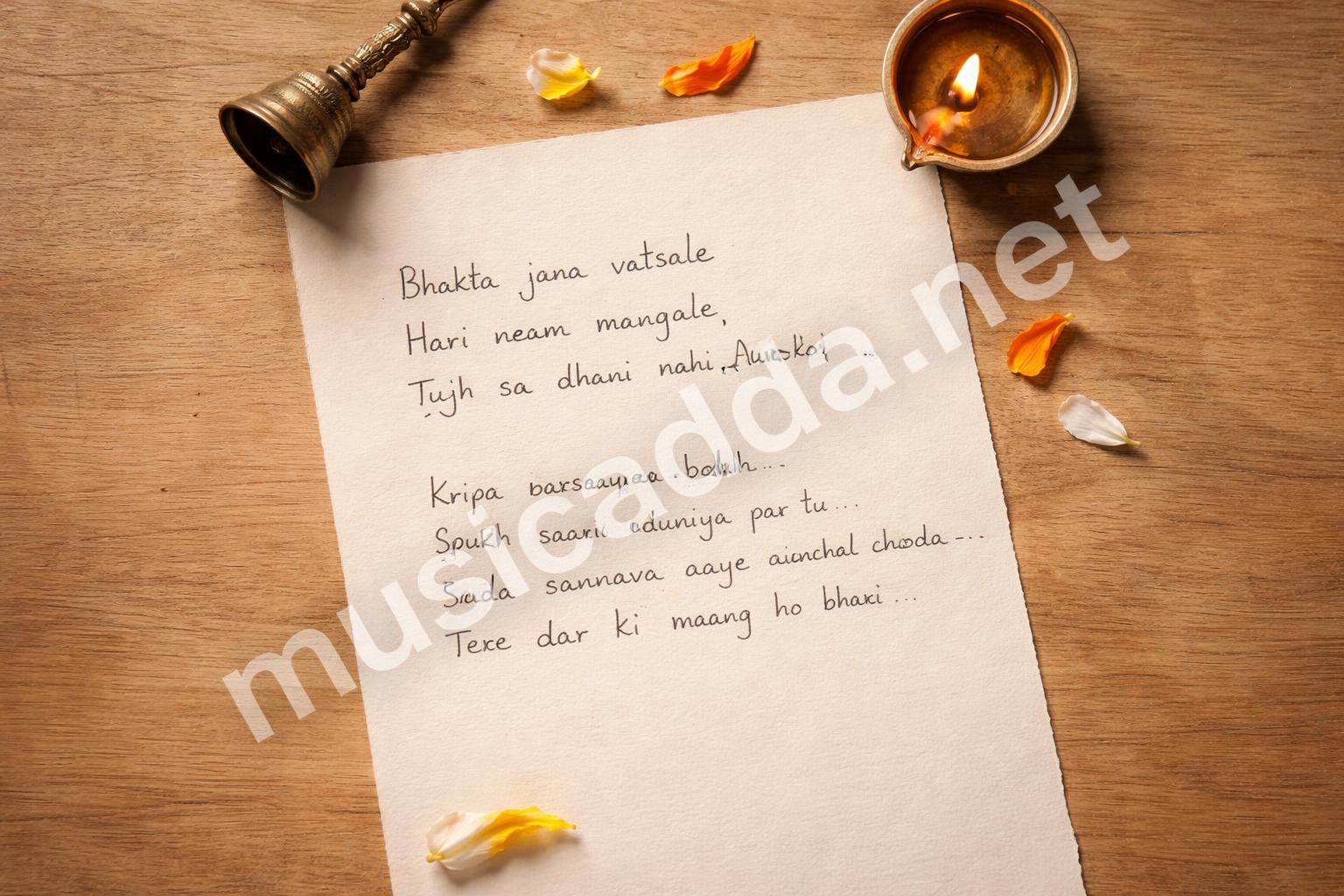
This is the version most people recognize right away. The wording can vary a little from household to household, but the flow stays familiar.
Easy-to-follow version with meaning in plain words
If you’re new to the aarti, the meaning becomes easier when you read it line by line.
1) “Jai Ganesh, Jai Ganesh, Jai Ganesh Deva”
This is the opening praise. It simply honors Lord Ganesha and sets the devotional tone.
2) “Mata Janki, Pitah Mahadeva”
This line points to Ganesha’s divine family, linking him with sacred parental blessings.
3) “Ek dant dayavant, char bhuja dhari”
This describes Ganesha as the one with one tusk and four arms, known for compassion and strength.
4) “Mathe sindoor sohe, muse ki savari”
The vermilion mark and the mouse as his vehicle are both important symbols of his form and presence.
5) “Paan chadhe, phul chadhe, aur chadhe meva”
Offerings of betel leaf, flowers, and sweets show devotion in a simple, traditional way.
6) “Ladduan ka bhog lage, sant kare seva”
The offering of laddus is a familiar part of many pujas, and the line reflects loving service.
7) “Andhan ko aankh det, kodhin ko kaya”
This is a prayer for restoration and grace, expressed in the language of blessing.
8) “Banjhan ko putra det, nirdhan ko maya”
This line asks for fulfillment, abundance, and divine kindness in difficult lives.
9) “Surya shaam sharan aaye, safal kije seva”
It ends by asking that worship done morning or evening be made successful.
That’s the basic shape. And honestly, once you understand this flow, the aarti feels much easier to sing with confidence.
A cleaner English rendering for daily puja
Some people prefer a more natural English version instead of a line-by-line transliteration. I think that makes sense, especially if you’re using the aarti for regular chanting at home.
Here’s a smoother devotional rendering:
Victory to Lord Ganesh, the giver of blessings
Salutations to the son of Mother Janki and Lord Mahadeva
You are one-tusked, kind, and blessed with four arms
The red mark shines on your forehead, and the mouse carries you
We offer you betel leaves, flowers, and sweet delights
We serve you laddus with devotion and love
You bless the blind with sight and the troubled with relief
You bring children to the childless and wealth to the needy
We come to you morning and evening in prayer
Please make our worship fruitful, O Lord Ganesh
This version is easier for many readers to follow because it reads like prayer, not just translation.
That’s completely normal if you prefer this form over the older, more literal style. The meaning matters, but the singing flow matters too.
The version most families actually use
Most people don’t realize this, but the “complete” aarti often changes slightly depending on region, priest, or family tradition.
You may hear:
- “Jai Ganesh Deva” or “Jai Ganesh, Jai Ganesh, Jai Ganesh Deva”
- “Mata Jaki” instead of “Mata Janki”
- slightly different endings in the last line
- short pauses added between verses during puja
None of that is unusual.
The good news is that the devotional intent stays the same. If the rhythm feels right and the words are respectful, you’re already very close to the traditional flow.
How I’d learn it if I were starting fresh
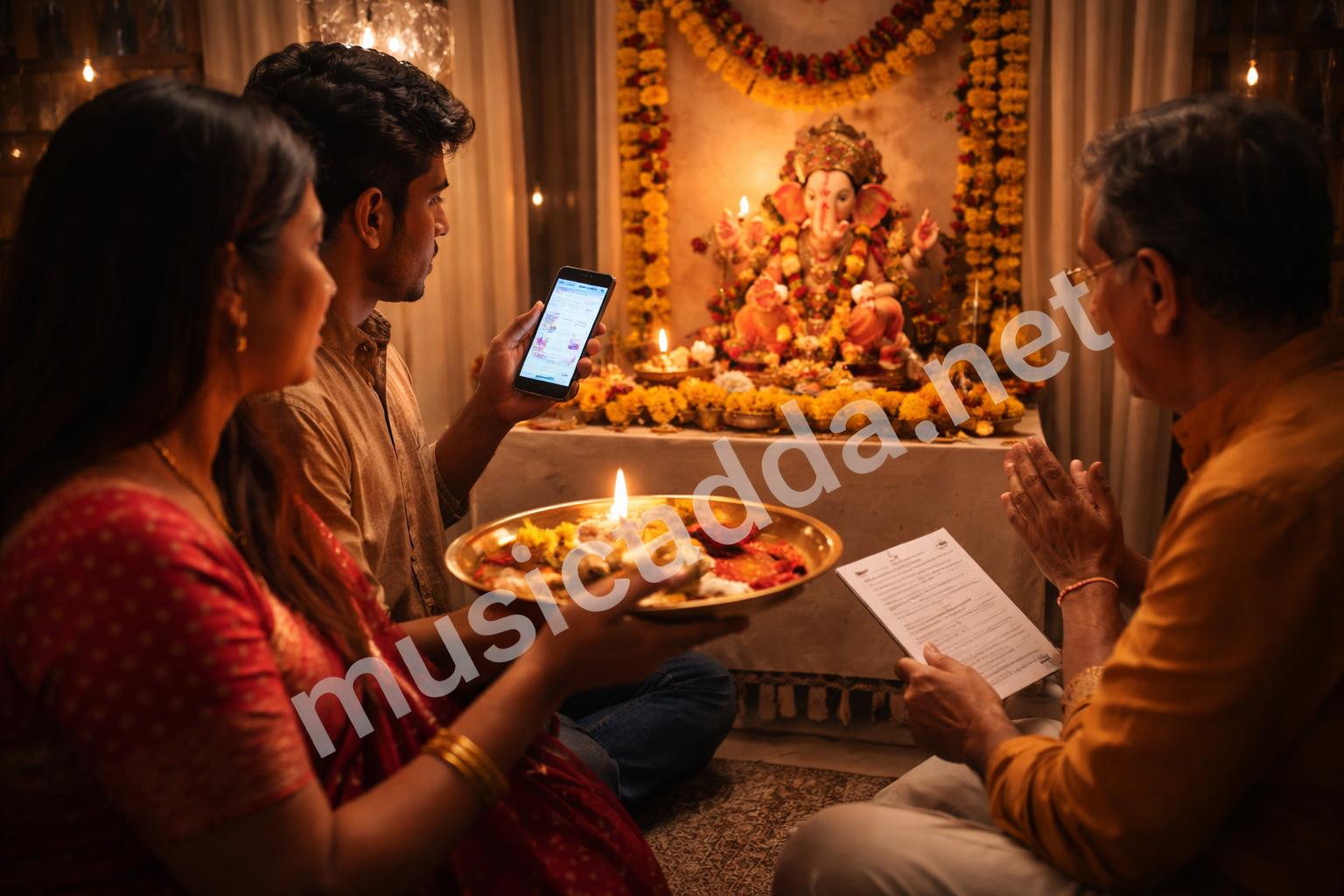
When a prayer has repeated lines, people often try to memorize the whole thing at once. That usually backfires.
A better way is to break the Jai Ganesh Aarti English lyrics into small blocks.
- Learn the opening line first.
- Learn the offering lines next.
- Learn the blessing lines after that.
- Finish with the closing praise.
This keeps the words from blurring together.
Quick tip: sing it once slowly, then again at normal pace. The second round usually feels easier than the first.
I’ve seen people get stuck because they try to perfect pronunciation before they understand the structure. That’s a small mistake, but it makes the whole thing feel harder than it is.
Pronunciation notes that help a lot
Even in English, some lines still carry transliterated Sanskrit and Hindi sounds. If you say them gently and consistently, the aarti flows better.
A few useful reminders:
- Ganesh is usually said like “guh-NESH”
- Deva sounds like “DAY-vuh”
- Mahadeva is often spoken as “maa-HAA-day-vuh”
- Sindoor is roughly “sin-door”
- Mewa can sound like “may-vah”
You don’t need perfect pronunciation to pray well. But a steady rhythm does help, especially if you’re singing with others.
A calm pace almost always sounds better than a rushed one. That’s true in home puja, temple settings, and even simple morning chanting.

Using the aarti in daily worship
For daily puja, the aarti works best when it feels familiar, not forced.
A few small habits help:
- keep the lyrics written where you can see them
- sing one verse at a time if needed
- pause briefly between lines
- match the rhythm with the bell or diya
- focus on meaning, not speed
If you want the full traditional wording as a reference while learning, this page with Jai Ganesh Jai Ganesh Deva Aarti: Full Lyrics for Your Daily Puja is useful because it keeps the daily-practice format clear and familiar.
Small mistakes people make with aarti lyrics
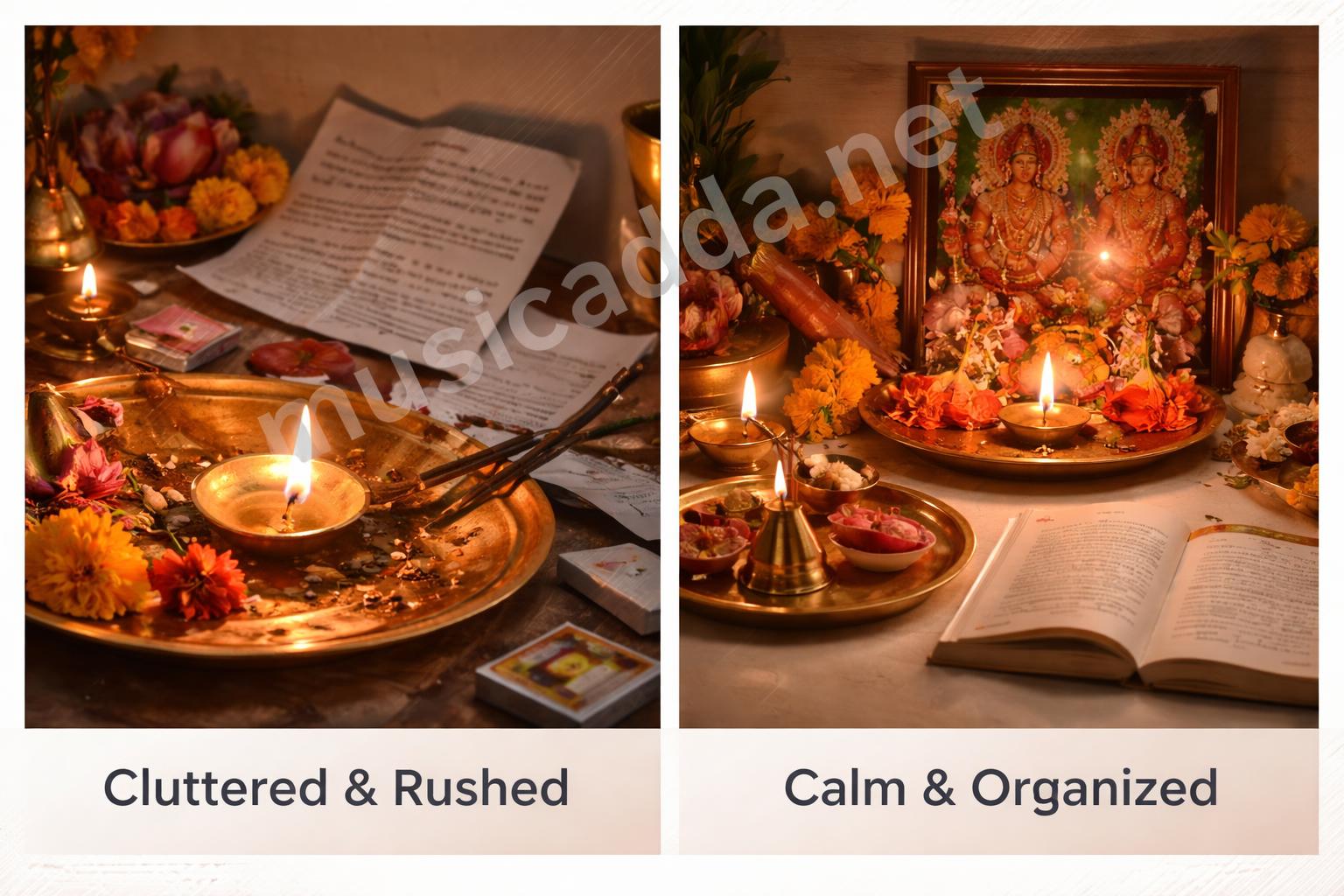
I think the biggest issue is not incorrect words. It’s rushing.
When people rush, they skip the devotional pause that gives the aarti its feeling. The words still come out, but the prayer loses some warmth.
A few common mistakes:
- mixing two versions together halfway through
- forgetting the closing line
- singing too fast to keep up
- treating the words like a recital
- changing rhythm every few lines
A simple fix is to treat the aarti like a steady loop, not a race.
If you’re leading others, that matters even more. People follow the pace you set, so a clear beginning and ending make everything smoother.
A simple verse-by-verse guide
Here’s a compact guide you can use as a memory aid.
| Verse | What it’s doing | Why it matters |
|---|---|---|
| Opening praise | Honors Ganesha | Sets the devotional mood |
| Divine family line | Links him to sacred blessings | Grounds the prayer |
| Form and symbols | Describes his appearance | Helps with focus and imagery |
| Offerings | Names the items being offered | Reflects ritual devotion |
| Blessing lines | Ask for grace and relief | Makes the prayer personal |
| Closing line | Returns to praise | Ends the aarti neatly |
This kind of structure helps if you’re teaching the aarti to children or learning it yourself after a long break.
And yes, it’s normal if you only remember two or three lines at first. Most people build the rest over time.
If you want the words to feel natural, do this
A lot of readers ask for the Jai Ganesh Aarti English lyrics because they want something they can sing, not just read. That’s a useful goal.
Try this approach:
- read the lyrics once silently
- say them out loud without music
- sing them slowly with a fixed beat
- repeat the opening and closing lines until they stick
- use the same version every time for a while
Consistency helps more than perfection.
One thing I learned is that switching versions too often makes memorization harder. If you like one form, stick with it for a few days before comparing alternatives.
Aarti, meaning, and feeling together
The best devotional singing usually has three parts: the words, the meaning, and the feeling.
If one of them is missing, the experience still works, but it feels thinner.
The words give you structure.
The meaning gives you purpose.
The feeling gives you connection.
That’s why the Jai Ganesh Aarti English lyrics are so useful for modern readers. They make the prayer easier to enter without losing the devotional mood.
Quick FAQ
Is there only one English version?
No. Different households and websites use slightly different wording, but the core lines stay the same.
Can I sing the English version in a temple?
Usually yes, as long as the setting allows it and the version matches the mood of the group.
Do I need to know the Hindi version first?
Not at all. Many people start with English or transliteration and learn the Hindi form later.
What matters more, exact words or devotion?
Both matter, but devotion and steady rhythm matter more than being perfect.
Final thought
For me, the easiest way to keep any aarti alive is to make it part of a routine I can actually maintain.
If the Jai Ganesh Aarti English lyrics help you sing with more ease, that’s already a good start. And once the words settle in, the prayer usually feels less like something you’re trying to remember and more like something you already know.

“`json
Save This Guide on Pinterest
Save this image to Pinterest so you can easily return to this guide later.