Ganpati puja can feel incomplete when the aarti isn’t ready on time. The moment usually comes when everyone is standing there, thali in hand, and someone suddenly asks for the right lyrics.
If you’ve ever had that small panic, you know how quickly the mood can slip. A missing line or a half-remembered verse can break the flow, especially during family puja or aarti at home.
In this article, I’m sharing Ganesh Aarti in Hindi in a simple, useful way, along with a wider set of aartis people often keep handy for Ganpati Puja. You’ll find devotional favorites, practical tips for singing them, and a few easy ways to keep the puja smooth.
Why Ganesh Aarti in Hindi matters during Ganpati Puja
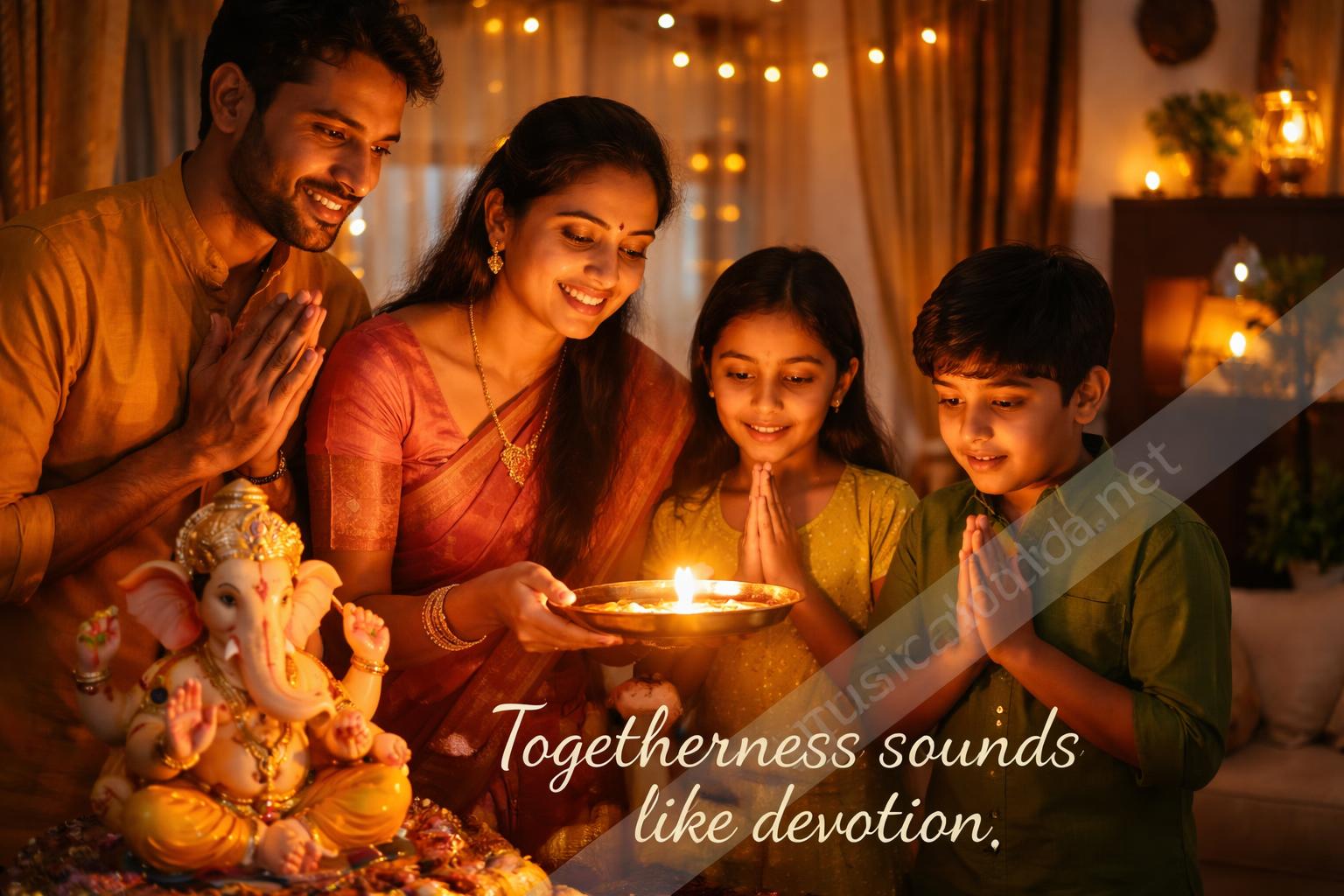
For most families, the aarti is the emotional center of Ganpati Puja. It’s not just about reciting words.
It changes the whole rhythm of the room. People become quieter, children slow down, and even a simple home puja starts feeling more sacred.
That’s why having the lyrics in Hindi helps so much. When the words are familiar, the aarti feels natural, not forced.
I’ve noticed that many people know the tune but get stuck on one or two lines. That small hesitation is enough to make everyone look around awkwardly, so keeping a clean Hindi version nearby really helps.
Jai Ganesh Jai Ganesh Deva: the aarti most people start with
If there’s one Ganesh aarti almost everyone recognizes, it’s “Jai Ganesh Jai Ganesh Deva.” It’s the one that shows up in homes, temples, and morning pujas again and again.
You can also find a full lyric version in this helpful reference on Jai Ganesh Aarti lyrics in Hindi, which is useful when you want a complete version in one place.
The reason this aarti stays popular is simple: it’s easy to sing, easy to remember, and it keeps the devotional energy steady.
Complete aarti text in Hindi
जय गणेश जय गणेश देवा
माता जाकी पार्वती, पिता महादेवा॥
एकदन्त दयावन्त चारभुजा धारी
माथे पर तिलक सोहे, मूसे की सवारी॥
जय गणेश जय गणेश देवा
माता जाकी पार्वती, पिता महादेवा॥
पान चढ़े, फूल चढ़े और चढ़े मेवा
लड्डुअन का भोग लगे, संत करें सेवा॥
जय गणेश जय गणेश देवा
माता जाकी पार्वती, पिता महादेवा॥
अंधन को आँख देत, कोढ़िन को काया
बांझन को पुत्र देत, निर्धन को माया॥
जय गणेश जय गणेश देवा
माता जाकी पार्वती, पिता महादेवा॥
‘सुर’ श्याम शरण आएं, सफल कीजे सेवा
माता जाकी पार्वती, पिता महादेवा॥
जय गणेश जय गणेश देवा
माता जाकी पार्वती, पिता महादेवा॥
One thing I learned while keeping lyrics handy for puja is that spacing matters more than people think. If the words are printed too tightly, nobody wants to read along, and the flow slows down.
31 beautiful aartis devotees often keep for Ganpati Puja
Not every home uses the same set of aartis. Some families keep just one main aarti, while others like to rotate through a few devotional songs during Ganesh Chaturthi or daily puja.
I find that a short list works better than a huge one. People are more likely to actually use it.
Here’s a practical way to think about the 31 aartis idea: not as a strict performance list, but as a devotional collection you can draw from based on time, mood, and tradition.
Commonly used Ganesh aartis and stotras
- Jai Ganesh Jai Ganesh Deva
- Sukhkarta Dukhharta
- Shendur Lal Chadhayo
- Ganpati Bappa Morya
- Vakratunda Mahakaya
- Atharvashirsha-based prayers
- Ganesh Vandana
- Mangal Murti Morya
- Sindoor Lal Chadayo
- Om Gan Ganapataye Namah chanting sequence
Some families treat these as full aartis, while others use them as part of a longer puja routine. That’s normal, and honestly, it depends more on family tradition than on any fixed rule.
Aarti rhythm: what makes a Ganesh aarti feel right
The words matter, but the rhythm matters too.
Aarti feels more powerful when the group sings together at the same pace. If one person goes too fast and another lags behind, the whole thing starts to feel disconnected.
I’ve seen that happen even in very devotional homes. The fix is usually simple: choose one lead singer, keep the tempo steady, and don’t rush the last line.
A good aarti is less about perfection and more about shared attention.
Small things that help during puja
- Keep the lyrics open on a phone or printout
- Start a little slower than you think you need to
- Let the first round settle everyone into the melody
- Use the same version each day if you want consistency
- Don’t worry if kids only know the chorus at first
The good news is that Ganesh aarti is forgiving. Even if the timing isn’t perfect, the devotion still comes through.
Short Ganesh aarti lines for daily puja
Not every puja needs a long session. For regular morning prayer or a quick home ritual, short lines are often easier to manage.
This is where a simple chant can help you stay consistent. You don’t need a full performance every day to keep the practice meaningful.
A few people I know actually keep only one or two lines ready by the puja shelf. That sounds basic, but it works.
Easy daily-use lines
गणपति बप्पा मोरया
मंगल मूर्ति मोरया
वक्रतुंड महाकाय
सूर्यकोटि समप्रभ
निर्विघ्नं कुरु मे देव
सर्वकार्येषु सर्वदा
These shorter phrases are especially useful when time is tight. They also help children participate without feeling overwhelmed.
How to choose the right aarti for your Ganpati Puja
Not every house needs the same mix. Some want a calm, traditional puja, while others prefer a more energetic family gathering.
Aarti choice usually comes down to three things:
- Time available
- Family tradition
- Comfort with the lyrics
If you’re hosting guests, a familiar aarti like Jai Ganesh Jai Ganesh Deva usually works best. If it’s a quiet morning puja, a shorter chant can feel more natural.
One small mistake I’ve noticed is people picking a very long aarti when nobody knows the lines. The result is a lot of silence and page-turning, which kills the mood a little.
A simple rule that works
- Use a familiar aarti for group puja
- Use a short chant for daily worship
- Use a longer devotional set when you have time and a lead singer
That keeps the puja smooth and avoids the awkward pause that happens when everyone starts looking for the next line.
Sukhkarta Dukhharta and other beloved favorites
Many readers looking for Ganesh Aarti in Hindi also want the classics that show up in Maharashtrian homes and community celebrations.
Sukhkarta Dukhharta is one of those aartis that carries deep emotional weight. It feels warm, ceremonial, and very rooted in tradition.
Shendur Lal Chadhayo also stays popular because it fits Ganesh worship so naturally. The imagery, the offering, and the rhythm all work together.
If you want a broader reference point, this roundup of 21 powerful Ganesh aartis every devotee should know is a useful companion when you want to expand your puja list without making it complicated.
Why people keep returning to these songs
- They’re familiar across generations
- They fit home puja and temple puja
- They’re easy to join, even for guests
- They create a strong devotional atmosphere
The emotional part matters here. Sometimes a family keeps singing the same aarti for years because it reminds them of elders, festivals, and a certain way of gathering.
A practical puja setup that makes the aarti easier
This isn’t a ritual textbook, but a little setup planning goes a long way.
If the diya, bells, and lyrics are all ready before you begin, the aarti feels smoother. If people are still searching for matchsticks or opening song pages mid-way through, the energy drops fast.
Keep these close before starting
- Puja thali
- Diya or lamp
- Incense
- Flowers
- Aarti lyrics printout or phone
- Bell, if your tradition uses one
I used to think the setup was secondary, but it actually changes how people participate. When everything is within reach, people stay present instead of getting distracted.

Aarti etiquette that helps in family settings
There’s no need to make puja feel stiff, but a little etiquette keeps it respectful.
Usually, the person leading the aarti should hold the thali steadily and keep the rhythm clear. Others can join with folded hands, sing along, or take turns ringing the bell if that’s part of the tradition.
A few small habits that help
- Don’t talk during the main aarti
- Keep phones on silent
- Let elders lead if they prefer
- Pass the thali carefully
- Stay focused until the aarti ends
The biggest mistake is rushing through the final lines just to finish. That moment is often the most meaningful part for everyone in the room.
Where to keep lyrics so you don’t scramble at the last minute
This is one of those tiny details that saves a lot of stress.
I’ve seen families keep a folded printout in the puja drawer, save the lyrics in a notes app, or pin them on the wall near the shrine. Any of those works, as long as it’s easy to access.
For daily use, a clean digital note is practical. For festivals, a printed sheet is better because someone’s phone always seems to disappear right when the aarti starts.
Best options by situation
| Situation | Best way to keep lyrics |
|---|---|
| Daily puja | Notes app or bookmarked page |
| Family aarti | Printed sheet near the altar |
| Festival gathering | Large easy-to-read printout |
| Travel puja | Phone screenshot or saved note |
That tiny bit of preparation can prevent a lot of last-minute confusion.
A few mistakes people make with Ganesh aarti
Most mistakes aren’t serious, but they do affect the flow.
Some people start without checking the lyrics. Others pick a tune that only one person knows. And sometimes the volume gets so low that nobody can really follow along.
Common slip-ups
- Using an unfamiliar version for a group
- Starting before everyone is ready
- Singing too fast
- Not keeping the lyrics visible
- Letting the aarti become a rush job
The fix is simple enough: slow down, keep one version ready, and let the room settle before you begin.
A simple way to keep Ganpati Puja meaningful every time
If I had to reduce the whole thing to one habit, it would be this: keep one main aarti ready and one short chant ready too.
That gives you flexibility without clutter. You don’t need thirty different things in front of you, even if the devotional list is long.
When the mood is calm, go with a full aarti. When time is short, use a short chant. That balance is what makes puja sustainable over the long run.
Consistency matters more than trying to do everything.
A final note on singing from the heart
There’s a reason Ganesh aarti in Hindi stays so loved. The words are familiar, but the feeling changes every time you sing them.
Some days the aarti feels energetic. Some days it feels quiet. And some days it’s simply a family moment you remember later without trying to.
That’s enough, honestly. The best aarti is the one that brings everyone into the same moment, even if the singing isn’t perfect.
Save This Guide on Pinterest
Save this image to Pinterest so you can easily return to this guide later.