Ganesh Ji Ki Aarti is often the first prayer many of us hear at home, in a mandir, or before a new beginning. If it’s missing, the whole moment can feel a little incomplete, and sometimes even a small puja loses its warmth. I’ve noticed that people usually remember the tune, but not always the words, and that can make the aarti feel less steady than it should. In this article, I’m sharing 21 powerful aartis every devotee should know, along with a simple way to choose the right one for daily prayer, festivals, and special family moments.
Why Ganesh Ji Ki Aarti still matters in daily worship
Aarti is not just a ritual at the end of prayer. It’s the moment when the whole room seems to settle.
For many families, Ganesh Ji Ki Aarti marks the shift from preparation to devotion. The bell rings, the diya moves, and the mind stops wandering for a bit.
That’s the real value here. The words, the rhythm, and the repetition help people focus, even if they’ve had a chaotic day.
One thing I’ve seen often is that people rush through the aarti when they know only half the lines. That usually breaks the flow. If you learn a few complete aartis well, the prayer feels calmer and more natural.
A simple way to think about aarti
- For daily worship: keep one short, familiar aarti.
- For festivals: choose a fuller, more devotional version.
- For family gatherings: use the one everyone can join in easily.
If you want a broader list of traditional lines and variations, the 51 Jai Ganesh Aarti Lyrics to Bring Blessings, Peace & Prosperity page is a useful starting point.
21 Ganesh Ji ki Aarti lyrics every devotee should know
I’m keeping this list practical. Some are widely sung, some are regional or devotional versions, and some are shorter forms people use at home.
1) Jai Ganesh Jai Ganesh Deva
This is the one most people know first. It’s simple, steady, and easy for groups to sing together.
2) Sukhkarta Dukhharta
This aarti feels especially strong during Ganesh Chaturthi. The words carry comfort, and the melody usually makes people pause.
3) Vakratunda Mahakaya Aarti
Many devotees use this before starting anything important. It feels short, direct, and very grounded.
4) Ganpati Bappa Moriya Aarti
This version carries more festival energy. It works well when the mood is joyful and devotional at the same time.
5) Shendur Lal Chadhayo Aarti
This is one of the most beloved forms offered to Lord Ganesha. The imagery in the lyrics is vivid, so it leaves an impression.
6) Gajananam Bhutganadisevitam
This is more like a stotra-style devotional recitation, but many families include it in the same prayer flow.
7) Siddhivinayak Aarti
This one is closely associated with blessings for success and removing obstacles. It’s a favourite in many homes.
8) Morya Re Bappa Morya Re
Short, energetic, and deeply devotional. You’ll hear this often in processions and community celebrations.
9) Om Gan Ganpataye Namo Namah Aarti
This has a mantra-like quality. It’s not long, but it creates a strong devotional atmosphere.
10) Pratham Pujya Ganpati Dev Aarti
The phrase “first worshipped” matters here. It reminds devotees why Ganesha is honored at the start of rituals.
11) Ganesh Chalisa with Aarti ending
Strictly speaking, this is not only an aarti, but many families end the recitation with aarti-style singing. That makes it feel complete.
12) Ganesh Ji Ki Aarti in Hindi traditional form
This is the version most households keep in memory. The wording may vary slightly by region, but the devotional purpose stays the same.
13) Ganapati Aarti from Maharashtrian tradition
Maharashtra has some of the strongest Ganesh worship traditions. The aarti often feels rhythmic and full of community feeling.
14) Ganesh Aarti for new beginnings
This version is often used before house functions, office openings, and exam days. It’s more of a devotional format than a single fixed text.
15) Ganesh Ji ki aarti for morning prayer
A shorter form works well in the morning. It helps set a clear tone without taking too much time.
16) Ganesh Aarti for Ganesh Chaturthi
This is usually more expressive and festive. The energy is different from a quiet daily puja.
17) Ganesh Aarti for home temple
A home temple calls for something easy to remember. A short aarti usually works better than something too long.
18) Ganpati Aarti for children
This one matters more than people think. If children can join in, they start learning devotion in a simple way.
19) Ganesh Ji Ki Aarti for business success
Many shopkeepers and small business owners begin their day with this intention. It’s less about luck and more about starting with discipline and faith.
20) Ganesh Aarti during sankashti
This is often sung on Sankashti Chaturthi nights. The feeling is different, a little more focused and serious.
21) Ganesh Visarjan Aarti
This one carries mixed emotions. It’s devotional, but it also feels like farewell, gratitude, and hope all at once.
A small thing I learned is that people often try to memorize too many versions at once. That usually makes them hesitate. It’s better to know two or three well than to know ten halfway.
The most useful aartis to learn first
If you’re only starting, don’t try to learn the whole list in one go. I’d keep it simple.
Start with these three:
- Jai Ganesh Jai Ganesh Deva
- Sukhkarta Dukhharta
- Shendur Lal Chadhayo
These three cover most home pujas, festivals, and group gatherings. They’re also easier to repeat with confidence.

Why these three work so well
- They’re widely recognized.
- They fit both small and large prayer settings.
- People around you can usually join in.
- They create a proper devotional rhythm.
I’ve seen that once someone learns these well, they stop worrying about “doing it wrong.” That confidence changes the whole prayer experience.
How I choose the right Ganesh Ji Ki Aarti for the moment
This part is more practical than it sounds. The right aarti depends on the setting, the time, and the people around you.
For a quiet daily puja
Use a short, familiar aarti. It keeps the prayer steady and avoids rushing.
For Ganesh Chaturthi
Choose a fuller and more energetic one. The festival deserves a little more feeling and celebration.
For a family gathering
Pick a version everyone knows, especially if elders and children are both present.
For morning prayer
A simple aarti works best. You want focus, not a long performance.
For visarjan
Use something that feels respectful and emotionally complete. The mood matters here.
Quick tip: if you’re unsure, ask one simple question — does this aarti help the room settle, or does it make people fumble? That answer usually tells you enough.
A small pronunciation habit that helps a lot
Most people don’t realize this, but pronunciation changes how the aarti feels in a group. Not because perfection matters, but because steady recitation helps everyone follow along.
I’ve heard people stop and restart too often when they worry about every word. That breaks the natural flow.
Try this instead:
- Read it slowly once.
- Mark the words you stumble on.
- Repeat those lines separately.
- Then sing the full aarti at a comfortable pace.
If you want a deeper devotional vocabulary around festivals and cultural observance, the Republic Day quotes collection for proud Indians isn’t about aarti itself, but it does show how Indian expressions of pride and devotion often live side by side in everyday writing and ritual language.
Common mistakes people make with Ganesh Ji ki aarti
Most mistakes are small, but they can still disturb the mood.
Singing too fast
This is the biggest one. Fast singing may feel efficient, but it usually sounds rushed.
Switching versions halfway
That happens a lot when people only know fragments. It makes the aarti feel uneven.
Treating it like a performance
Aarti isn’t about sounding polished. It’s about devotion and shared focus.
Ignoring the group rhythm
If others are singing with you, keep pace with them. One voice moving too far ahead can throw everyone off.
Forgetting the mood of the day
A joyful festival aarti and a quiet evening aarti don’t need the same energy.
One thing I noticed is that the best aarti singers are rarely the loudest. They’re the ones who keep the rhythm calm enough for everyone else to join in.
Aarti lines people often ask about
A few lines come up again and again in home discussions, so it helps to know what they’re really doing in the prayer.
“Jai Ganesh, Jai Ganesh, Jai Ganesh Deva”
This opening line is an invitation. It establishes respect and attention right away.
“Mata Jaki Parvati, Pita Mahadeva”
This line reminds devotees of Ganesha’s divine family and his place in the larger tradition.
“Andhe ko aankh det, kodhin ko kaya”
This line speaks of blessings and transformation. That’s why it feels so powerful in the middle of the aarti.
“Sukhkarta Dukhharta Varta Vighnachi”
This is one of the most meaningful lines for devotees because it speaks directly about comfort and removal of obstacles.
If you sing these lines often, you’ll notice they become less like text and more like memory. That’s usually when devotion starts feeling natural.
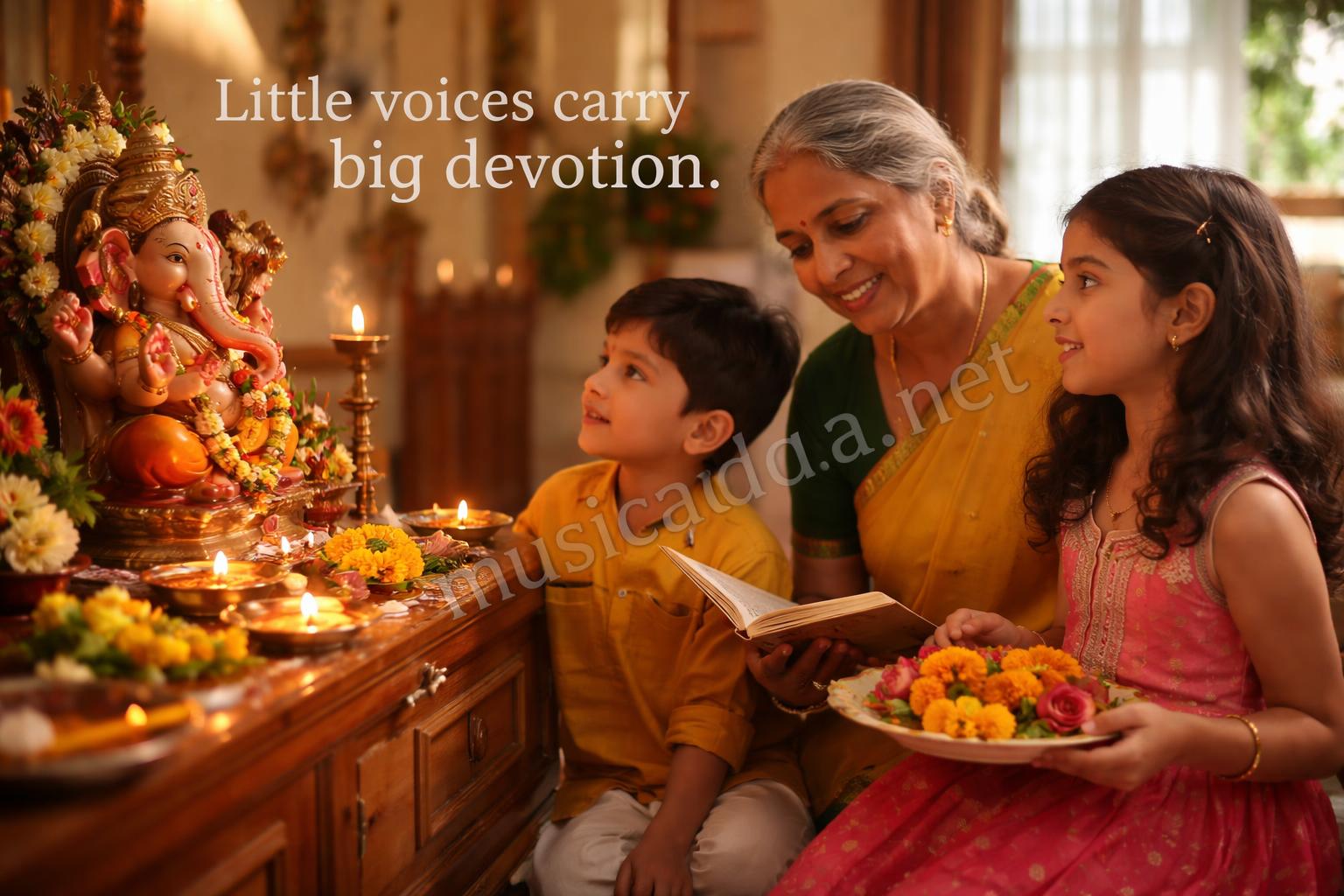
When children are learning aarti at home
This is where patience matters most.
Children usually remember rhythm before meaning. That’s completely normal.
So I’d keep the approach simple:
- Start with one aarti.
- Sing with them, not at them.
- Repeat the same line several times.
- Use the diya, bell, and flowers to keep their attention.
A small family ritual can do more than a long explanation. Kids remember what feels warm.
Short guide to building a home Ganesh aarti routine
You don’t need a perfect setup. You need a steady one.
- Light the diya.
- Offer flowers or durva.
- Ring the bell once or twice.
- Sing one aarti slowly.
- End with a silent moment.
That’s enough for many homes.
If you want to add more, do it later. Don’t overload the prayer in the beginning. I’ve seen people get discouraged when they make the ritual too complicated.
A small warning
If the room feels noisy, start with a shorter aarti and fewer distractions. The atmosphere matters more than the number of lines.
Why these aartis stay with people for years
The words are devotional, but the real reason they stay is simpler. They’re tied to memory.
People hear them during childhood, weddings, new business openings, festivals, and family prayer times. So the aarti becomes part of the emotional fabric of life.
That’s why Ganesh Ji Ki Aarti doesn’t feel old or repetitive to many devotees. It feels familiar, and familiar can be powerful.
A few trusted ways to explore the lyrics further
If you want to go beyond memory and check the wording carefully, it helps to use reliable devotional lyric pages, printed prayer books, or family copies that have been used for years.
I’d compare a few versions before deciding what to learn, especially if your family uses a regional form. Small wording differences are normal, but the devotional meaning should stay clear.
For more lyric variations and devotional phrasing, the detailed Ganesh aarti lyrics guide is a helpful reference while you build your own practice.
Final thought
The best aarti is the one you can sing with steadiness and heart. That’s what people remember, not whether every line was flawless. And honestly, once a family settles into one or two familiar versions, the whole prayer starts to feel easier, warmer, and more complete.
Save This Guide on Pinterest
Save this image to Pinterest so you can easily return to this guide later.