

Shopping for home insurance quotes can feel simple at first: open a few tabs, sort by price, and pick the cheapest one. But in practice, the lowest premium is often just the start of the story. The real challenge is figuring out which quote actually protects your home well enough when something goes wrong.
That means comparing more than the monthly or annual price. It means looking closely at coverage limits, deductibles, exclusions, replacement-cost terms, endorsements, and even the insurer’s reputation for handling claims. Two quotes can look similar on paper and still perform very differently when a storm, fire, or plumbing disaster hits.
The best approach is to treat home insurance as a value comparison, not a bargain hunt. A slightly higher premium can easily be the better deal if it prevents thousands in out-of-pocket costs later.
Start with the same coverage in every quote
One of the most common mistakes homeowners make is comparing quotes that are not actually comparable. If one insurer gives you a lower dwelling limit, a higher deductible, or fewer endorsements, the quote will naturally look cheaper. But that does not mean it is better.
Before reviewing prices, make sure each quote includes the same:
- Dwelling coverage limit
- Personal property coverage
- Liability limits
- Additional living expenses coverage
- Deductible amount
- Endorsements or add-ons
If those terms are not aligned, the price difference is not very meaningful. You are not comparing the same product.
A quote also becomes less useful when the property details are wrong. Roof age, renovations, security systems, claims history, and even the way the home is described can all affect the price. If the information is incomplete, the quote may be misleading from the start.
The details people miss most often

The biggest quote surprises usually come from the details people skip over. The premium gets attention, but the coverage language is where the real value lives.
A few details are especially easy to overlook:
-
Replacement cost vs. actual cash value
Replacement cost pays to replace damaged property at current prices, while actual cash value subtracts depreciation. That difference can be huge, especially for roofs and older belongings. -
Dwelling coverage limits
Many homeowners confuse market value with rebuilding cost. Insurance should be based on what it would cost to rebuild the home, not what it could sell for. -
Separate wind or hail deductibles
In storm-prone areas, these deductibles can be much higher than the standard deductible. -
Water and sewer backup coverage
Standard home insurance often does not include it. -
Flood and earthquake exclusions
These are commonly excluded and usually require separate policies. -
Roof settlement terms
Some policies reduce roof claims based on age or depreciation. -
Ordinance or law coverage
This can help pay for code-required upgrades during repairs. -
Personal property sub-limits
Certain categories like jewelry, electronics, or collectibles may have low payout caps. -
Liability limits
A low liability limit can leave a homeowner exposed in a serious lawsuit. -
Additional living expenses
This matters if you need to live elsewhere while repairs are completed. -
Home business exclusions
If you run even a small business from home, exclusions can create a coverage gap. -
Service line coverage
Broken underground utility lines can be expensive and are often overlooked.
This is why “cheap” and “good value” are not the same thing.
Why a low quote can become an expensive mistake
A low home insurance quote can look smart in the moment, but it may turn into a bad deal later if the policy is stripped down in the wrong places.
One example stands out clearly: a homeowner chose the lowest quote available. Later, after a severe storm, they discovered the policy used actual cash value for roof damage and included a high wind-and-hail deductible. Once depreciation and the deductible were applied, the homeowner had to pay thousands out of pocket.
The slightly more expensive quote would have been the better value because it offered replacement-cost coverage. That is the lesson many people learn too late: saving a bit on the premium can cost far more when the claim arrives.
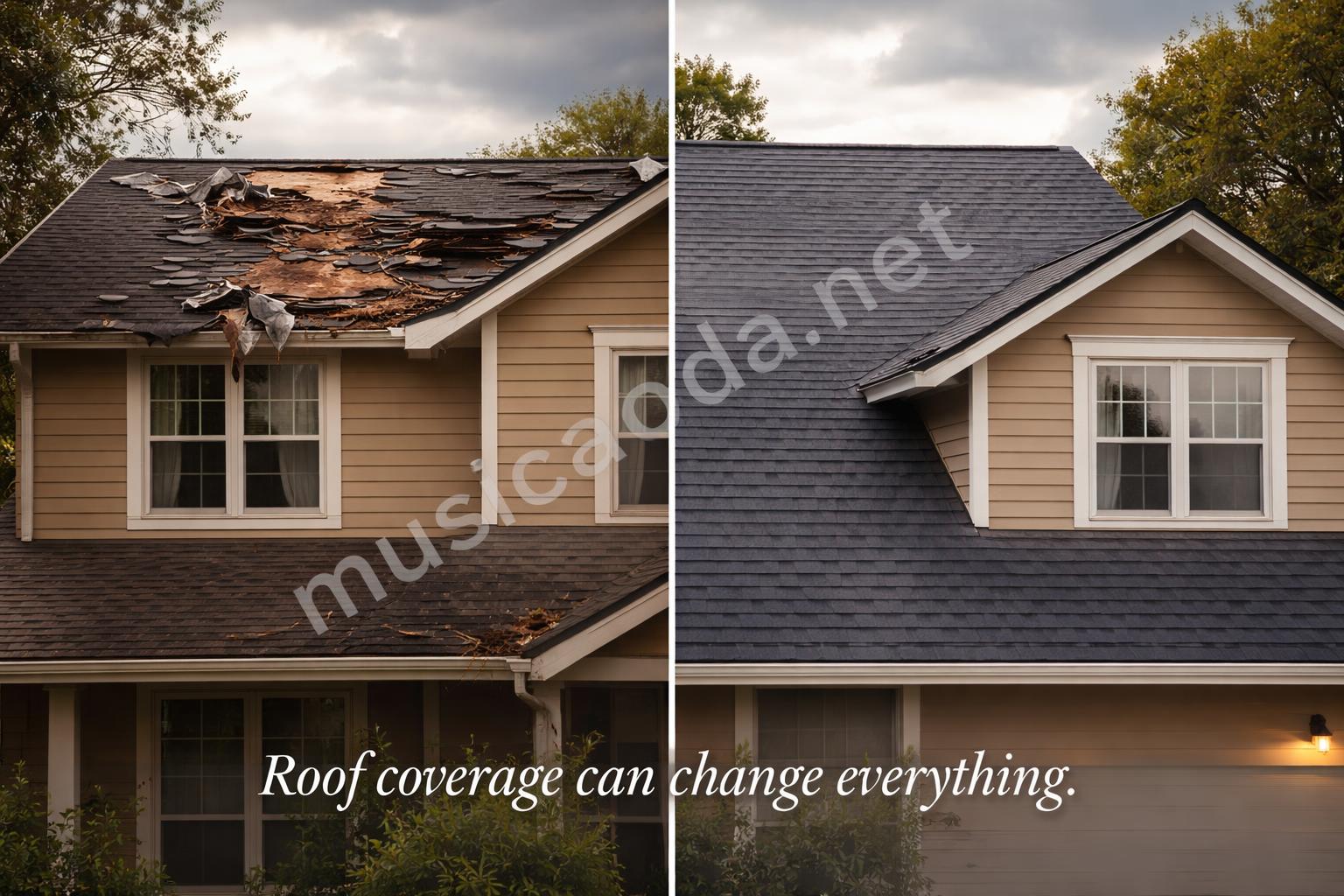
This is especially important for roofs. An older roof can raise premiums, reduce available coverage, or even cause an insurer to decline the application. If a policy’s roof terms are weak, the quote may be affordable for the wrong reason.
How location, roof age, and claims history shape quotes
Home insurance quotes are not random. They are heavily influenced by risk factors tied to the property and the homeowner’s history.
Location
Where you live can affect exposure to:
– Crime
– Wildfire
– Flooding
– Severe storms
– Higher local rebuilding costs
A home in a safer area with lower weather risk often gets better quotes than a home in a high-risk zone.
Roof age
A newer roof is usually a plus. An older roof can increase premiums, reduce coverage options, or create extra conditions and deductibles. Insurers often see the roof as a major point of vulnerability.
Claims history
If you have had frequent or expensive claims, insurers may see you as a higher risk. That can mean higher rates, fewer discounts, or fewer companies willing to quote at all. A clean claims record generally helps keep prices more manageable.
The point is not that you can control every risk factor. You cannot move your house or magically make the neighborhood safer. But you can make sure the quote reflects accurate information and that you understand why it costs what it does.
Deductibles and coverage limits: the two numbers that change everything
Deductibles and coverage limits are often the main reason home insurance quotes differ so much.
A deductible is the amount you pay before insurance contributes to a covered claim. A higher deductible usually lowers the quote, but it also means more out-of-pocket risk.
A coverage limit is the maximum the insurer will pay for that part of the policy. If the limit is too low, a cheaper quote can become painfully expensive after a loss.
This is why it helps to think in real-life terms:
– Could you comfortably pay the deductible tomorrow?
– Would the dwelling limit actually rebuild the house?
– Is the personal property amount enough to replace your belongings?
– Is the living-expense limit enough if you had to move out for months?
If the answer to any of those is no, the quote may not be strong enough.
Add-ons that are often worth paying for
Not every endorsement is necessary, but some add-ons can be worth the extra cost because they cover common gaps in standard policies.
The ones worth close attention include:
- Replacement-cost coverage for belongings
- Extended replacement cost for the home
- Water and sewer backup
- Ordinance or law coverage
- Service line protection
- Equipment breakdown
- Scheduled coverage for valuables
- Flood or earthquake coverage where relevant
These additions are worth reviewing because standard home insurance often excludes or limits the exact losses that can become the most expensive. A small premium increase may buy a much better cushion against a real-world disaster.
Signs a quote is incomplete or misleading
Not every quote deserves equal trust. Some are incomplete, some are estimates disguised as offers, and some leave out key terms that matter later.
Red flags include:
- Missing coverage limits
- Unusually low rebuilding estimates
- Different deductibles across quotes
- Hidden wind or hail deductibles
- Actual cash value instead of replacement cost
- Unclear exclusions
- Missing endorsements
- Omitted property details
- Temporary discounts that may not last
- Incomplete liability or living-expense coverage
- Unexplained fees
- A quote labeled as an estimate instead of a confirmed offer
If any of these appear, pause and ask for clarification before comparing it to other offers.

Another warning sign is a quote that looks too good because something important was left out. If the policy seems dramatically cheaper than others, the reason may be weaker coverage, not better pricing.
Don’t forget the insurer itself
The cheapest policy is not always the best policy if the insurer is slow to respond, difficult to reach, or weak financially. Home insurance is a promise to pay after a loss, so the company behind the policy matters.
When comparing quotes, it helps to look at:
- Financial strength
- Claims service reputation
- Ease of communication
- Customer support experience
- How clearly the policy terms are explained
A strong insurer with better claims service can be worth paying slightly more for. That difference becomes much more important during a stressful claim than it ever is while shopping.
How to balance affordability and protection
The smartest approach is not to buy the most expensive policy or the cheapest one. It is to choose the strongest protection you can reasonably afford.
A good balance usually comes from these actions:
- Compare identical coverage limits.
- Insure the home for its full rebuilding cost.
- Choose the highest deductible you could comfortably pay.
- Prioritize replacement-cost coverage.
- Review exclusions and special deductibles.
- Add coverage for major local risks.
- Use discounts and bundling carefully.
- Keep an emergency fund for the deductible and any gaps.
- Choose strong protection over the lowest premium.
That last point is easy to say and harder to practice. But it is usually the one that saves people from regret later.
How to get more accurate quotes the first time
If you want better home insurance quotes from the start, two actions make the biggest difference.
First, provide complete and accurate property information. Include the roof age, renovations, safety features, prior claims, and any home business activity. If you leave something out, the quote may not reflect the real risk.
Second, request quotes from several insurers using identical coverage limits, deductibles, and endorsements. Without that consistency, price comparisons can be misleading.
Those two steps alone can make your quotes more accurate, more competitive, and much easier to compare.
A simple quote-checking habit that saves headaches
Before you choose a policy, read each quote like a claim might happen tomorrow. That mindset changes everything.
Ask:
– What exactly is covered?
– What is excluded?
– What deductible applies?
– What happens to the roof?
– Are storm deductibles separate?
– Does the policy replace belongings at full value?
– Is there enough liability protection?
– Would temporary housing be covered long enough?
If the answer is unclear, the quote is not finished yet.
Final thoughts
Home insurance quotes are only useful when they are compared carefully. The lowest premium may be tempting, but a policy with weak roof terms, high storm deductibles, actual cash value coverage, or missing endorsements can cost much more when you need it most.
The best quote is usually the one that balances price with real protection. Focus on coverage limits, deductibles, exclusions, replacement cost, insurer strength, and the risks most relevant to your home. If you get those pieces right, you are far more likely to choose a policy that performs well in real life, not just on paper.

Save This Guide on Pinterest
Save this image to Pinterest so you can easily return to this guide later.