If you’ve stared at “like a sage” in a crossword and felt your brain stall, that’s completely normal. Clues like this look simple, but they usually hide a very plain answer in plain sight, and if you miss the wordplay, you can burn a lot of time.
The good news is that this clue usually points to a small set of answers, not a giant mystery. In this article, I’ll walk through the most likely solution, why it works, and the little clue signals that help you get there fast. I’ll also show you a few related crossword patterns, including one useful guide to solving short NYT-style clues fast if you want to get better at these quick, tricky entries.
The Most Likely Answer
In most crosswords, “like a sage” means WISER or WISE.
That’s the simplest reading. A sage is a wise person, so “like a sage” often becomes an adjective meaning wise, sage-like, or learned.
If the clue space is 4 letters, WISE is the most likely answer.
If it’s 5 letters, WISER is the one to check first.
That’s the first thing I look at: the number of boxes. It usually cuts the problem in half right away.
Quick answer check
- 4 letters: WISE
- 5 letters: WISER
- 6+ letters: less common, but still something like SAPIENT in harder puzzles
Most everyday crosswords won’t get fancy here. They want the clean, normal answer.
Why This Clue Is So Straightforward
This is one of those clues that feels more confusing than it really is.
A lot of solvers see sage and think about the herb, or a name, or something mystical. But crossword clues usually reward the most common meaning first. Here, that meaning is a wise person.
So “like a sage” is basically asking for a word that means wise.
The trick is not to overthink it.
Crosswords love simple definitions dressed up to look harder than they are.
I’ve seen this happen with a lot of clues that use “like a…” phrasing. The answer is often just an adjective describing the noun in the clue. That’s why these are so easy to miss when you’re rushing.
How to Solve It Fast
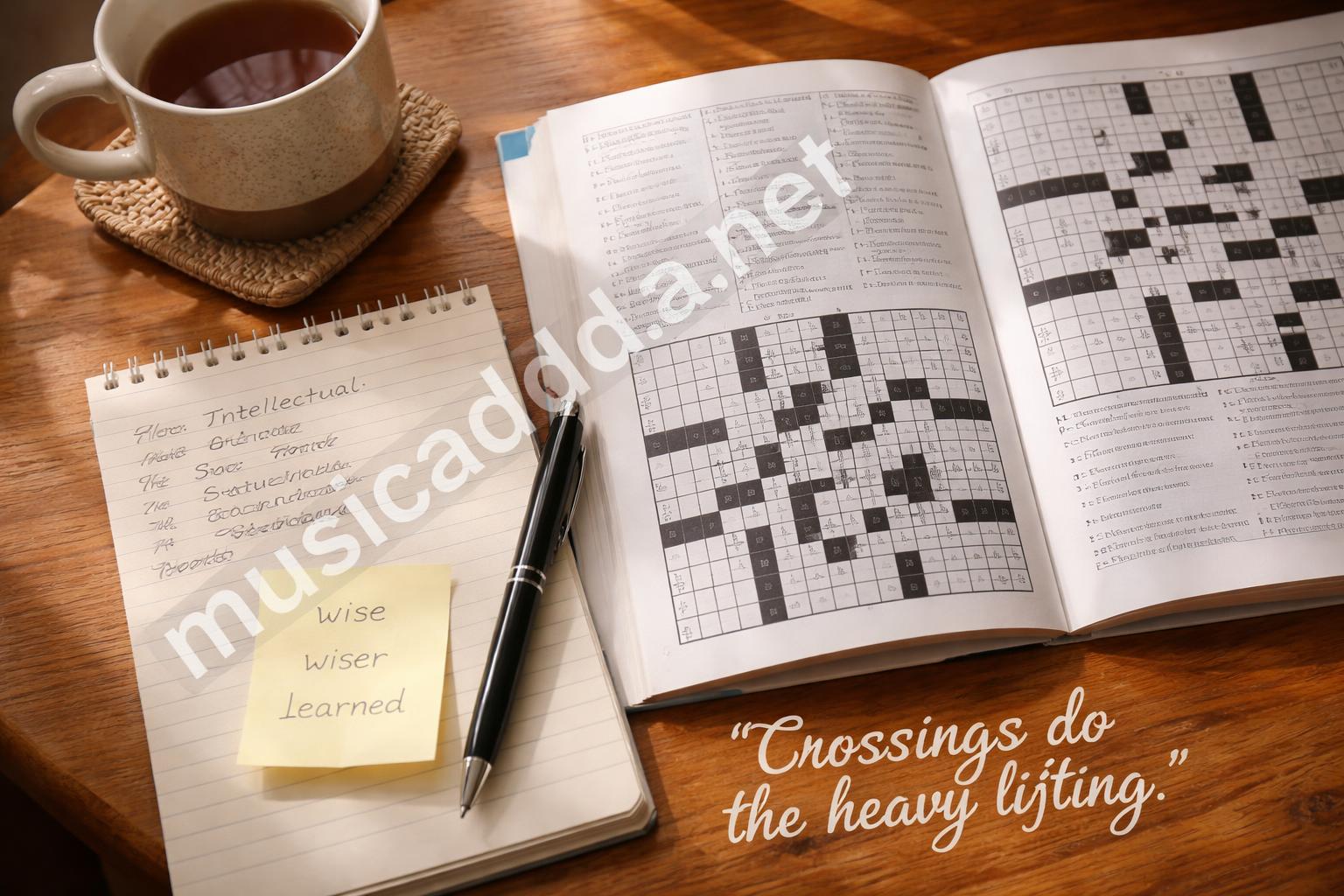
When you get a clue like this, I’d use a quick little process.
-
Count the letters.
This matters more than anything else. -
Find the part of speech.
“Like a sage” wants an adjective. -
Try the plain synonym first.
Wise, wiser, learned, sagacious. -
Check the crossings.
The letters from nearby answers usually confirm it fast. -
Don’t chase the herb meaning unless the clue signals it.
If the clue said something like “sage in a stew,” then sure, think herb. Not here.
One thing I learned from solving these is that the obvious answer is often right, and it only feels boring because the clue is built to distract you. That’s not a bad thing. It’s just crossword style.
Common Answers You Might See
Here’s a quick comparison of likely fills.
| Letter count | Likely answer | Why it fits |
|---|---|---|
| 4 | WISE | Direct adjective for a sage-like person |
| 5 | WISER | Means more sage-like, often used in clue form |
| 7 | SAGACIOUS | Formal word meaning wise, but less common in easy puzzles |
| 7 | LEARNED | Sometimes used if the clue leans toward educated or experienced |
| 7 | SAPIENT | More advanced crossword answer |
Most solvers should start with WISE or WISER.
That’s where the odds are best.
When the Clue Is Trying to Fool You
Sometimes crossword editors like to make a clue feel a little more literary than it really is.
That can happen with a clue like this because sage has a polished, old-fashioned vibe. It sounds like it should lead to a big word. But often it doesn’t.
A few things can throw people off:
- thinking sage means the plant
- assuming the answer must be rare or fancy
- overlooking simple comparative forms like wiser
- not checking the entry length first
The plant meaning is the biggest trap. I’ve made that mistake myself in themed puzzles where one clue points in one direction and the surrounding theme pulls it somewhere else. But on its own, this clue is usually just a synonym test.
If the Puzzle Is Themed, Watch the Context
Context can change everything.
In a themed crossword, a clue can bend toward the theme even if the surface meaning looks normal. So if the puzzle has a philosophy, wisdom, or old-school knowledge theme, WISE becomes even more likely. If the theme is botany or cooking, then the whole clue set may be playing with the word sage in a different way.
A good habit is to ask:
- Does this puzzle have a theme?
- Are there repeated word tricks?
- Does the clue feel literal or playful?
- Do nearby answers support a wisdom meaning?
That last one matters more than people think. Crossings are usually the real referee.
A Few Similar Crossword Clue Patterns
If you’ve solved this clue, you’ll start recognizing the pattern everywhere.
Crosswords often use short adjective clues in the same way:
- “like a fool” → foolish
- “like a hero” → heroic
- “like a king” → regal
- “like a sage” → wise
That structure is so common that once you spot it, the clue gets easier almost immediately.
The big lesson is that the answer usually isn’t about the noun itself. It’s about the quality connected to the noun.
So with sage, you’re not looking for something about herbs. You’re looking for something about wisdom.
A Simple Way to Narrow It Down
If you’re stuck in the middle of a grid, use this little checklist.
Ask yourself:
- Is the clue asking for an adjective?
- Is the answer likely common?
- Does the letter count fit WISE or WISER?
- Do the crossing letters support either one?
- Is the puzzle trying to be tricky, or is it staying plain?
If you’re still not sure, write both possible answers lightly in your mind and let the crossings decide. That’s often faster than staring at the clue another minute.
Related Clue Help You Might Find Useful
Some clue types show up again and again, especially in mainstream puzzle sources. If you like learning these by pattern, it helps to compare them with other short clue breakdowns, like this guide to what “Passover month” usually means in crosswords.
That kind of clue teaches the same skill: don’t jump too far, and don’t assume the surface is the whole story.
I’ve noticed that once people get comfortable with these smaller clue families, their solve speed jumps more than they expect. Not because they know every answer, but because they stop hesitating on the easy ones.
What to Do If WISE Doesn’t Fit
Sometimes the clue looks obvious, but the letters just won’t cooperate. That’s when you slow down and test the second-best option.
Try these in order:
- WISE
- WISER
- SAGACIOUS
- LEARNED
- SAPIENT
If none of those fit, the clue may be using a different angle entirely. It could be a pun, a theme clue, or a rare word fill that only makes sense once the crossings are complete.
That’s where patience matters. Crossword solving is often less about knowing the answer instantly and more about not forcing the wrong one.
A bad guess can cost you two or three squares later.
That’s why I like to keep short options open until I’m sure.
Tiny Clue Signals That Matter
Some small signals are worth paying attention to.
- “Like” often means “having the quality of”
- “A sage” points to wisdom first
- Short clues usually want short answers
- Common crosswords prefer common words
- Fancy-looking clues still often hide simple entries
That last point is worth remembering. A clue can sound elegant and still be asking for the plainest possible answer.
A Quick Mental Shortcut
Here’s the shortcut I use when a clue like this pops up.
- Read the clue once.
- Strip away the style.
- Ask, “What trait defines a sage?”
- Say the first common adjective that matches.
- Check the boxes.
For this clue, the answer is usually WISE or WISER.
That’s it. No ceremony, no deep theory.
Final Answer
For “Like a sage”, the most likely crossword answer is:
- WISE if the answer is 4 letters
- WISER if the answer is 5 letters
If the puzzle is a little more advanced, you might also see SAGACIOUS or another wisdom-related synonym, but most of the time it’s one of the first two.
The nice thing about this clue is that once you solve it once, you’ll probably never miss it again. And honestly, that’s how a lot of crossword progress happens — one plain clue at a time, until the pattern starts feeling familiar.
Save This Guide on Pinterest
Save this image to Pinterest so you can easily return to this guide later.