If you’re new to football, the terms can feel like a second language. Miss a few of them and the game starts sounding simple on the surface, but confusing in real time.
That usually leads to one awkward moment after another, especially when everyone around you is reacting to a play you don’t fully understand. The good news is that you don’t need to memorize everything at once.
This guide walks through 75 football terms every new fan needs to know, in plain language, so you can follow the action, talk about the game, and stop feeling lost the second the whistle blows.
Start with the basics of football terms
Football has its own rhythm, and the language follows that rhythm. A lot of the most important words are just shorthand for what’s happening on the field.
If you get these early, the rest of the sport makes way more sense.
The field and the game setup
Here are some of the first football terms worth learning:
- Line of scrimmage: the invisible line where each play starts.
- Snap: when the center hikes the ball to the quarterback.
- Down: one of the four tries a team gets to move the ball.
- First down: the first of those four tries.
- Chains: the measuring equipment used to mark first-down distance.
- End zone: the scoring area at each end of the field.
- Goal line: the line the offense crosses to score a touchdown.
- Sideline: the boundary on the long sides of the field.
- Hash marks: the small lines that help spot the ball.
- Field position: where the ball is on the field.
Those terms come up constantly on broadcasts. Once you know them, the commentary stops sounding like background noise.
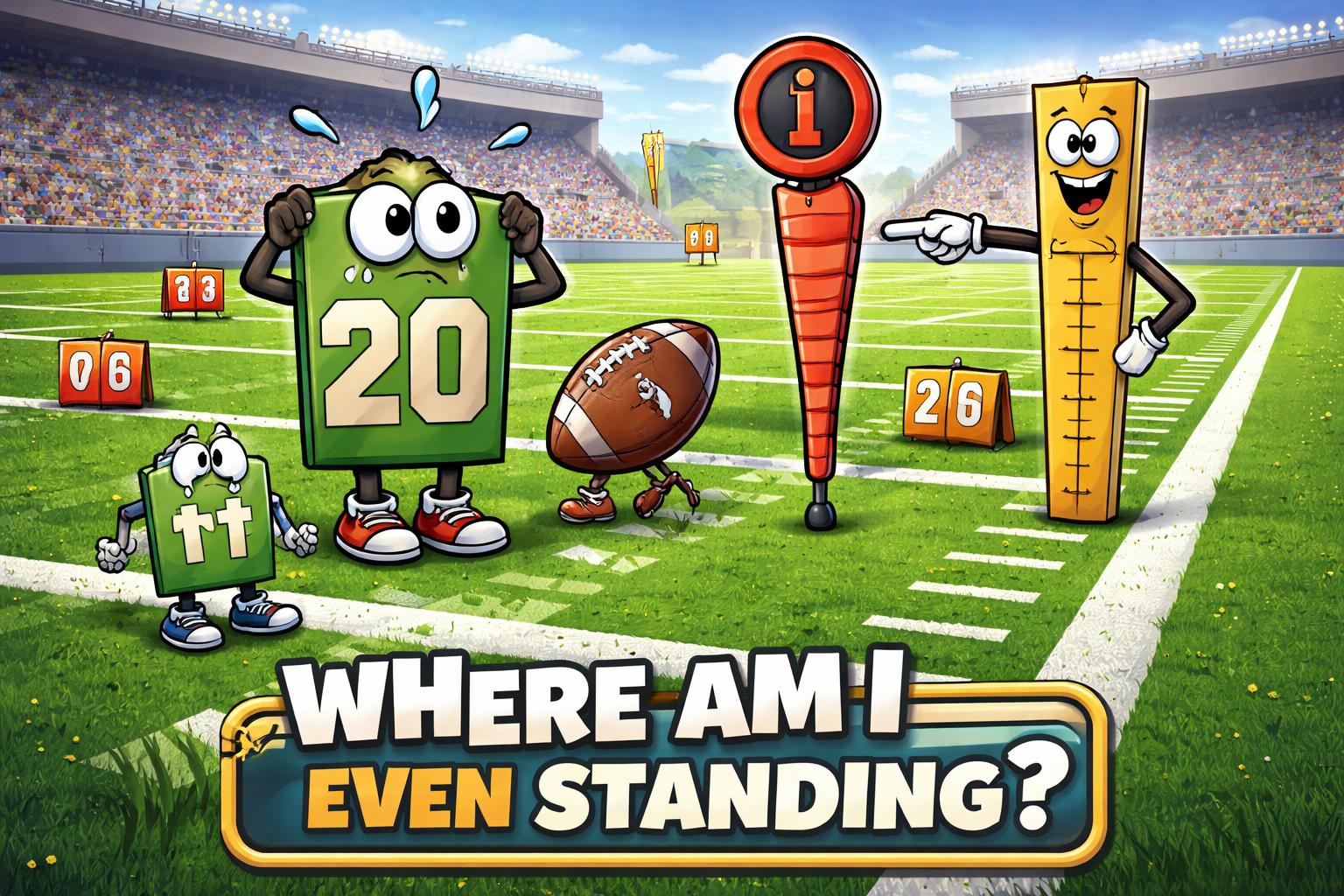
One thing I learned early is that “line of scrimmage” gets mentioned far more than beginners expect. If you know where that line is, you can follow most plays better than you think.
The terms that explain how a drive works
A drive is just one team trying to move the ball down the field and score. It sounds simple, but the pieces of a drive have their own names.
The most common drive terms
- Drive: a team’s series of plays while on offense.
- Possession: when a team has control of the ball.
- Series: another word for a group of plays on offense.
- Three-and-out: when a team fails to get a first down in three plays and punts.
- Turnover on downs: when a team fails on fourth down and loses the ball.
- Red zone: the area near the opponent’s end zone, usually inside the 20-yard line.
- Goal-to-go: when the offense is close enough that all the needed yards are between the ball and the end zone.
- Time of possession: how long a team keeps the ball.
- Field goal range: the area where a kicker has a realistic shot.
- Two-minute warning: the clock stoppage near the end of each half.
These are the kinds of words that tell you whether a drive is going well or falling apart. A team can look fine on one play, then suddenly be in trouble because it’s third-and-long.
That “third-and-long” part is one of those phrases people hear all game and never quite unpack.
Down-and-distance, without the confusion
This is where a lot of new fans get stuck, because football keeps pairing numbers together. Once the pattern clicks, it gets much easier.
Down-and-distance terms
- First and 10: the most common starting situation.
- Second down: the next play after first down.
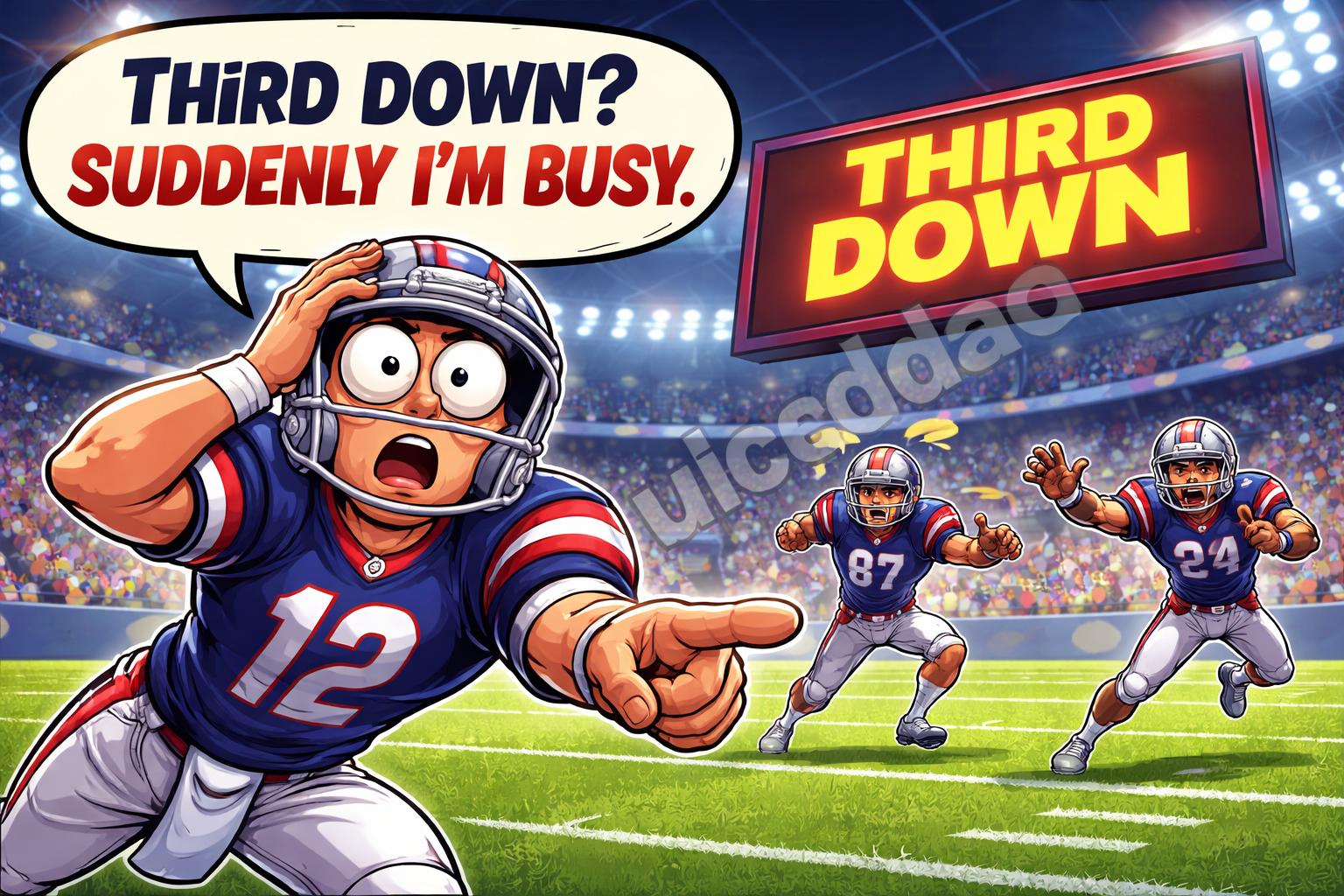
- Third down: a critical down where teams often decide whether to pass, run, or punt.
- Fourth down: the last chance to keep the drive alive.
- Short yardage: when only a few yards are needed.
- Long yardage: when many yards are needed.
- Third-and-short: usually a few yards to gain.
- Third-and-long: a tougher situation, often 7 or more yards.
- Fourth-and-inches: a nearly impossible-to-measure short gain.
- Conversion: successfully getting the needed yards.
If you’re watching with friends, this is one of the easiest places to sound more confident. Saying “That’s third-and-long” already tells people a lot.
A quick reading trick
A term like second-and-6 means:
– second down
– 6 yards needed for a first down
That’s it. The first number is the down, and the second number is the yards to go.
Offensive football terms every new fan hears a lot
Offense gets most of the attention because it handles the ball. That’s also why the language around offense shows up constantly.
Core offensive terms
- Quarterback: the main decision-maker on offense.
- Running back: the player who runs with the ball.
- Wide receiver: the player who catches passes near the sidelines or downfield.
- Tight end: a hybrid player who can block or catch.
- Offensive line: the group that protects the quarterback and opens lanes.
- Center: the offensive lineman who snaps the ball.
- Guard: an interior offensive lineman.
- Tackle: an offensive lineman on the outside.
- Wideout: a casual term for a wide receiver.
- Slot receiver: a receiver lined up between the outer receiver and the line.
A lot of new fans focus only on the quarterback. That’s normal. But the offensive line matters just as much, because if they collapse, the whole play usually collapses with them.
Plays and passes
- Run play: a play where the ball is handed off or carried.
- Pass play: a play where the ball is thrown.
- Screen pass: a short pass with blockers set up ahead.
- Play-action: a fake run that opens passing chances.
- Bootleg: when the quarterback rolls out after pretending to hand off.
- Option play: a play where the quarterback chooses between handing off, keeping the ball, or passing.
- Route: the path a receiver runs.
- Catch radius: the area a receiver can realistically catch in.
- Completion: a legal catch by an eligible receiver.
- Incompletion: an attempted pass that isn’t caught.
One small thing I noticed: people often assume every throw is a “pass completion” if it looks close. It isn’t. If the receiver doesn’t control it, it’s just an incomplete pass.
Defensive football terms that make the game easier to read
Defense can feel harder to follow because it reacts to the offense. Still, once you know the words, you can start spotting what a defense is trying to do.
Basic defensive language
- Defensive line: the front group trying to stop runs and pressure the quarterback.
- Linebacker: a versatile defender who supports against run and pass.
- Cornerback: a defender who usually covers wide receivers.
- Safety: a deep defender helping stop big plays.
- Coverage: the defensive strategy for guarding receivers.
- Blitz: when extra defenders rush the quarterback.
- Man coverage: each defender covers a specific player.
- Zone coverage: defenders cover areas instead of individual players.
- Pass rush: the effort to pressure the quarterback.
- Contain: preventing a quarterback or runner from escaping to the outside.
If you hear “they’re bringing a blitz,” it means the defense is gambling a little. It can create a sack, but it can also leave someone open.
Key defensive outcomes
- Tackle: stopping the ball carrier.
- Sack: tackling the quarterback behind the line of scrimmage.
- TFL: tackle for loss, which means the offense loses yards.
- Interception: when a defender catches a pass intended for the other team.
- Pass breakup: when a defender knocks the ball away.
- Forced fumble: when a defender knocks the ball loose.
- Recovery: when a team picks up a loose ball.
- Turnover: when possession changes hands.
- Pick-six: an interception returned for a touchdown.
- Safety: when the offense is tackled in its own end zone.
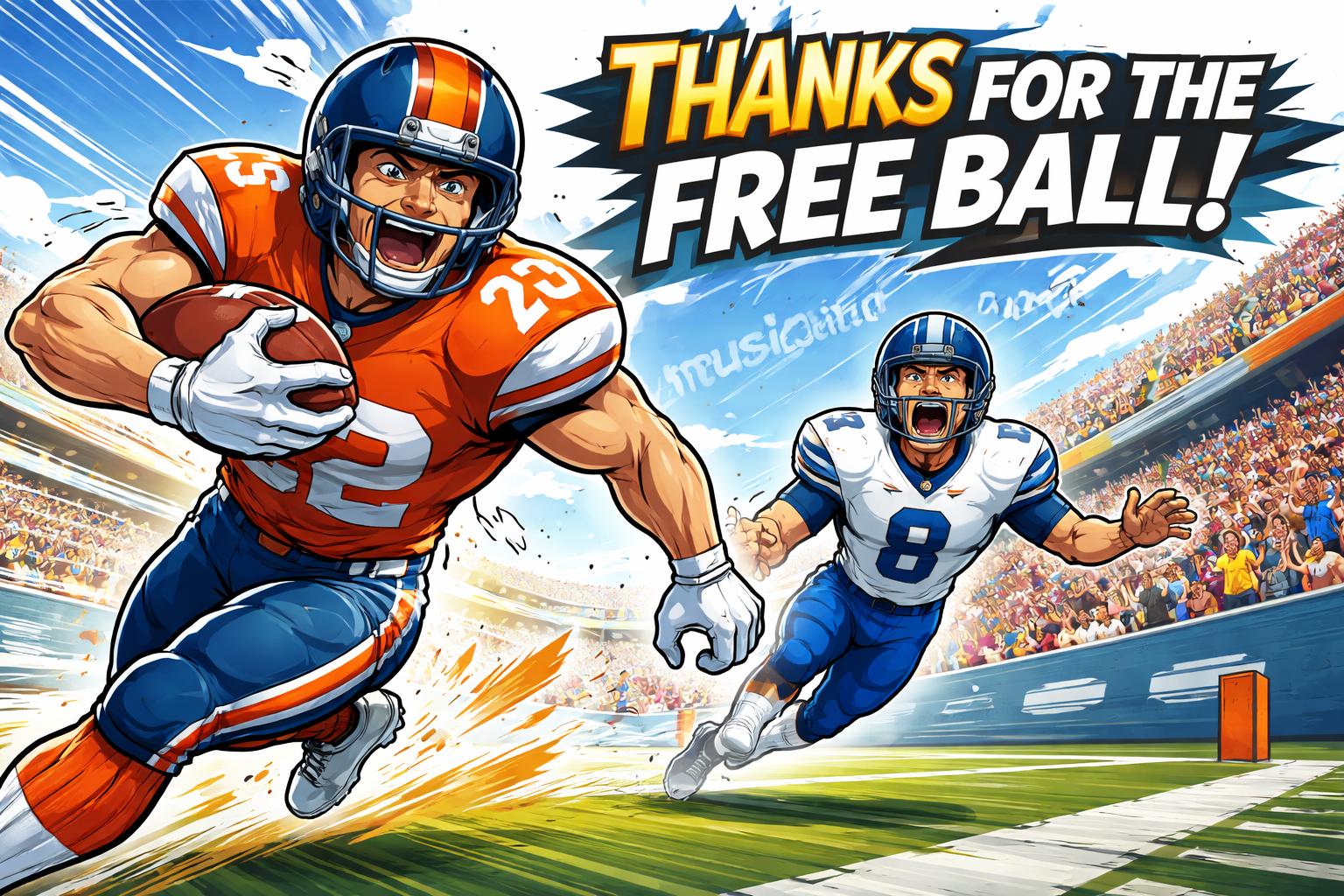
A pick-six sounds dramatic because it is dramatic. It’s one of those plays that flips the mood of a game almost instantly.
Special teams terms people forget until they matter
Special teams only gets a few spotlight moments, but those moments can change everything. A bad kick, a long return, or a missed extra point can swing the whole game.
Kicking and punting terms
- Kickoff: the opening kick to start a half or follow a score.
- Kick return: returning the kickoff.
- Punt: a kick used to give the other team the ball farther away.
- Punt return: returning a punt.
- Extra point: the kick or play after a touchdown.
- Field goal: a kick through the uprights for 3 points.
- PAT: point after touchdown, another name for the extra point.
- Uprights: the goalposts used for kicks.
- Touchback: when the ball is downed in the end zone and brought out.
- Return yardage: the yards gained on a return.
Here’s a simple truth: special teams can look boring until one play changes the game. Then everybody suddenly cares a lot.
A few more special teams words
- Holder: the player who places the ball for a kick.
- Long snapper: the specialist who snaps on punts and field goals.
- Kicker: the player who handles field goals and extra points.
- Punter: the player who punts the ball.
- Fake punt: a deceptive play where the team pretends to punt but runs or passes instead.
- Onside kick: a short kick designed to recover the ball.
- Fair catch: a signal to catch a punt without being tackled.
- Blocking return: when the return team sets up blocks to open space.
Scoring terms you’ll hear all season
Scoring is where football gets easy to cheer for, even if the terminology is a little odd at first. The point values matter more than the labels, but both are useful.
The main scoring plays
- Touchdown: worth 6 points.
- Field goal: worth 3 points.
- Extra point: usually worth 1 point.
- Two-point conversion: an attempt to score 2 points after a touchdown.
- Safety: worth 2 points.
- Scoreboard: the display showing the current score and time.
- Lead: when one team is ahead.
- Tie game: when both teams have the same score.
- Comeback: when a team catches up after trailing.
- Blowout: when one team is winning by a lot.
If a team goes for two after a touchdown, it usually means they want the extra point value or they don’t trust the kicker. That choice tells you something about how the coaches feel.
Penalties and rules that trip up new fans
Penalty talk can feel like a list of vague punishments at first. Then one flag gets thrown every other minute and suddenly you want the whole rulebook.
Common penalties
- Holding: illegally grabbing an opponent.
- False start: an offensive player moves before the snap.
- Offsides: a defender crosses the line too early.
- Encroachment: a defensive player enters the neutral zone before the snap.
- Pass interference: illegally blocking a receiver from catching the ball.
- Personal foul: a serious rule violation, often involving unnecessary roughness.
- Unsportsmanlike conduct: behavior officials punish for being disrespectful or excessive.
- Illegal formation: lining up wrong before the snap.
- Delay of game: failing to snap the ball in time.
- Intentional grounding: the quarterback throws the ball away to avoid a sack without a valid receiver nearby.
Rule-related terms
- Neutral zone: the space around the line of scrimmage.
- Eligibility: whether a player can legally catch a pass.
- Dead ball: a play that has ended.
- Live ball: a ball that is still in play.
- Replay review: when officials check a play on video.
- Challenge: when a coach asks for a review.
- Down by contact: when a player is ruled down because he was tackled before the ball came loose.
- Out of bounds: outside the legal field area.
- Timeout: a pause called by a team or official.
- Clock management: how teams use time strategically.
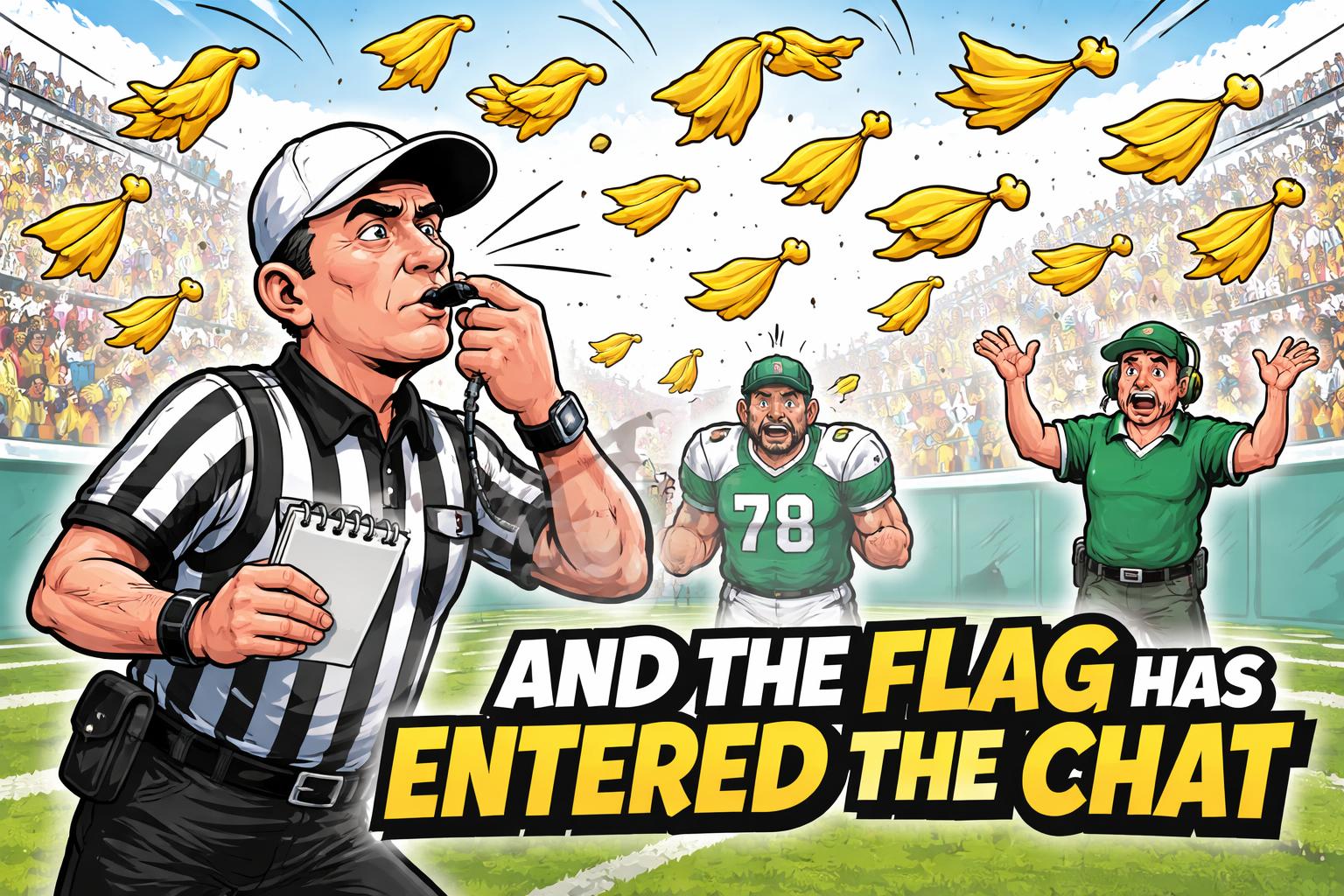
One mistake I see new fans make is assuming every flag means something huge. Sometimes it’s a small penalty, but it still changes the down, distance, or momentum.
Strategy terms that help you sound like you know what’s happening
This is the part that makes football more fun. Once you know the strategic language, you stop just watching plays and start noticing why they worked.
Common strategy words
- Scheme: the overall plan on offense or defense.
- Formation: how players line up before the snap.
- Formation package: a group of formations a team uses often.
- Pre-snap: the moment before the ball is snapped.
- Audible: when the quarterback changes the play at the line.
- Read option: a run-pass decision based on defensive movement.
- Stunt: a defensive line trick where players swap paths.
- Gap: a space in the line a runner tries to hit.
- Inside run: a run toward the middle.
- Outside run: a run toward the edge.
- Ball security: protecting the ball from fumbles.
- Tempo: the speed at which the offense runs plays.
- No-huddle: an offense that doesn’t wait between plays.
- Clock-killing: running plays or using timeouts to control the clock.
- Prevent defense: a deep coverage used to stop a big late-game play.
I’ve seen people get really into football the moment they hear the word audible in the right context. It makes the quarterback feel like the whole game is happening in his head, not just on the field.
A few fan terms and broadcast words are worth knowing too
These aren’t always “official” football terms, but you’ll hear them all the time on TV, in bars, and in group chats.
Casual football vocabulary
- Gridiron: another name for a football field.
- Pigskin: a nickname for the football.
- Huddle: the group meeting before a play.
- Momentum: the feeling that one team has the upper hand.
- Rivalry: a heated matchup between teams.
- Upset: when the underdog wins.
- Underdog: the team expected to lose.
- Veteran: an experienced player.
- Rookie: a first-year player.
- Breakout game: a standout performance from a player.
- MVP: most valuable player.
- Highlight reel: the best plays shown together.
If you’re new, this section helps more than it looks like it should. A lot of football talk happens in shorthand, and these words fill in the gaps.
Quick cheat sheet for learning football fast
Here’s the fastest way to make the terms stick:
- Learn down and distance first.
- Learn the main offensive positions.
- Learn the most common penalties.
- Learn what special teams does.
- Learn the scoring system.
- Pay attention to commentary during live games.
- Read the scoreboard as the play unfolds.
That last one matters more than people think. The scoreboard tells you the down, yards to go, field position, and time, all at once.
When you’re still confused, focus on three things
- Who has the ball
- How many yards they need
- How much time is left
That alone clears up a surprising amount.
A simple note on learning football terms
You don’t need to memorize all 75 football terms in one sitting. Most fans learn them in little chunks, usually after hearing the same phrase a few times.
The good news is that football repeats itself in useful ways. Once you understand a handful of basics, the rest starts to click faster than you’d expect.
And honestly, that’s the fun part. The game gets better when the language stops getting in the way.
One last thing
If you’re learning football from scratch, you’ll probably hear a term you don’t know every single game. That’s normal.
Just keep a small mental list, notice the patterns, and don’t stress about catching everything right away. The words will stick, and once they do, the game feels a lot bigger and a lot easier to enjoy.
For anyone who likes building a little context around sports moments, these positive New Year quotes for a fresh beginning have the same kind of clean, quick-read feel as a good football glossary.
And if you want a lighter break after all the football jargon, these Diwali quotes for celebration and light are another easy scroll.
Save This Guide on Pinterest
Save this image to Pinterest so you can easily return to this guide later.